Covid-19: Germany extends 10 billion euro relief to preserve workforce

The German economy contracted at its steepest rate on record in the second quarter and the government is desperate to mitigate the effects of the pandemic as much as possible

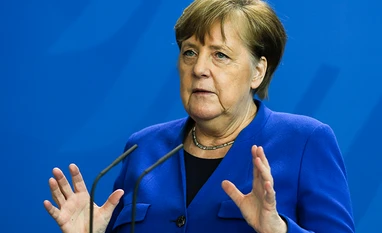
Angela Merkel
German Chancellor Angela Merkel's government has also brought in a massive stimulus package, worth more than 130 billion euros, that it hopes will help the economy return to growth
Reuters Berlin
2 min read Last Updated : Aug 27 2020 | 1:51 AM IST
German coalition parties agreed on Tuesday to extend measures to cushion the effects of the coronavirus crisis on Europe's biggest economy at a cost of up to 10 billion euros, including prolonging a short-time work scheme and freezing insolvency rules.
 
The German economy contracted at its steepest rate on record in the second quarter and the government is desperate to mitigate the effects of the pandemic as much as possible, especially in the run-up to elections in the autumn of 2021.
 
"Corona remains a reality and a challenge," said Annegret Kramp-Karrenbauer, leader of the conservative Christian Democrats (CDU) after around seven hours of talks with their centre-left Social Democrat (SPD) coalition partners.
 
"Today we have agreed that we will extend important and effective measures to how we deal with the coronavirus," she added.
 
Among the main decisions were an extension of short-time work subsidies, which had been due to expire in March 2021, until the end of next year and prolonging bridging aid for small and mid-sized companies until the end of this year.
 
Short-time work saves jobs by allowing employers to reduce the employees' hours but keeps them in work.
 
Finance Minister Olaf Scholz, a Social Democrat, told public broadcaster ZDF the measures could cost up to 10 billion euros next year.
 
"The goal now is to stabilise the economy," said Scholz.
 
"The fact that we acted fast and big has resulted in Germany weathering the crisis much better than other (countries)." The parties also agreed to prolong measures aimed at staving off bankruptcies by allowing firms in financial trouble due to the pandemic to delay filing for insolvency until the end of the year.
 
German Chancellor Angela Merkel's government has also brought in a massive stimulus package, worth more than 130 billion euros, that it hopes will help the economy return to growth.
 
The coalition parties also agreed on an electoral reform aimed at reducing the number of lawmakers in the Bundestag lower house of parliament.
 

One subscription. Two world-class reads.

Already subscribed? Log in

Subscribe to read the full story →
*Subscribe to Business Standard digital and get complimentary access to The New York Times

Smart Quarterly

₹900

3 Months

₹300/Month

SAVE 25%

Smart Essential

₹2,700

1 Year

₹225/Month

SAVE 46%
*Complimentary New York Times access for the 2nd year will be given after 12 months

Super Saver

₹3,900

2 Years

₹162/Month

Subscribe

Renews automatically, cancel anytime

Here’s what’s included in our digital subscription plans

Exclusive premium stories online

  • Over 30 premium stories daily, handpicked by our editors

Complimentary Access to The New York Times

  • News, Games, Cooking, Audio, Wirecutter & The Athletic

Business Standard Epaper

  • Digital replica of our daily newspaper — with options to read, save, and share

Curated Newsletters

  • Insights on markets, finance, politics, tech, and more delivered to your inbox

Market Analysis & Investment Insights

  • In-depth market analysis & insights with access to The Smart Investor

Archives

  • Repository of articles and publications dating back to 1997

Ad-free Reading

  • Uninterrupted reading experience with no advertisements

Seamless Access Across All Devices

  • Access Business Standard across devices — mobile, tablet, or PC, via web or app

Topics :CoronavirusGerman economyAngela Merkel

Next Story