Crown Prince Mohammed Salman's military revamp means billions to business

The purge of top business elites comes as Saudi Arabia is struggling to get a grip on the proxy war with Iran in neighboring Yemen
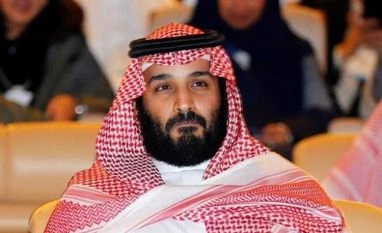
Saudi Crown Prince Mohammed bin Salman attends the Future Investment Initiative conference in Riyadh, Saudi Arabia October 24. Photo: Reuters
Glen Carey | Bloomberg
Last Updated : Mar 01 2018 | 7:48 PM IST
An army band with bagpipes marched past displays of machine guns and laser-guided missiles in Riyadh this week as international defense companies showed off their hardware.

Hours later, the Saudi government announced that several top commanders had been removed, including the chief of staff and the heads of ground and air forces.

If recent months have all been about Crown Prince Mohammed bin Salman’s crackdown on business elites, now he’s turned to the military as he extends his authority over the kingdom. The purge of top brass comes as Saudi Arabia is struggling to get a grip on the proxy war with Iran in neighboring Yemen.

But, like everything in Saudi Arabia at the moment, it comes back to the country's finances and the prince’s much-vaunted revamp of an economy too dependent on oil. 

Executives from Raytheon Co., Boeing Co., Rheinmetall AG and other international companies were at the exhibition to talk about how they fit into his “Vision 2030.” The new era for defense includes developing a domestic industry so that the world’s biggest importer of US weapons can make hardware itself in conjunction with foreign manufacturers.

For companies specializing in military equipment, it could mean billions of dollars in contracts as the kingdom spends decades building an industry from scratch. At the exhibition in Riyadh, dozens of companies marketed their cyber weaponry, combat vehicles and communications systems.

“There is a lot a business potential over the next five, 10 years, 15 years,” John Bottimore, vice president of international business development at the US unit of British company BAE Systems Plc, said in an interview at the exhibition. “We won’t have a position in Saudi Arabia long term if we don’t work with partners and transfer capability.”

The announcement on Monday of the change in military personnel came the same day as King Salman approved a plan setting out a “vision and strategy” for the Defense Ministry. In another major shift, the government also said military jobs at the rank of soldier would be open to women for the first time.

The country’s sovereign wealth fund established Saudi Arabian Military Industries, or SAMI, in May. The company plans to manufacture equipment and provide maintenance services across units, including air and land systems, weapons and missiles, and defense electronics, mainly in joint ventures.

“Saudi Arabia is seeking a degree of military self-sufficiency by developing a local defense industry and putting in some of the building blocks it would need should it decide that it needs a nuclear capability,” said James Dorsey, a Middle East specialist at Singapore’s Nanyang Technological University. US President Donald Trump’s opposition to Iran gives the Saudis a “window of opportunity,” he said.

The ultimate goal is to “localize” 50 percent of Saudi procurement from 2 percent now, according to SAMI’s chief executive officer, Andreas Schwer. That will create jobs and generate $10 billion a year in revenue for SAMI by 2030, he said in an interview at the exhibition.

Saudi Arabia started the exhibition in 2010 to develop its domestic military industry. The event, attended by Saudi companies and government officials, helps international companies find a local factory or service that they can use for their supply chain, said Major General Atyah al-Malki, general director of the general directorate for industrialization support.

Inside the hall, Saudi officers check out new uniforms, body armor, all-terrain vehicles and military-industrial components on display from companies as diverse as Ankara-based Roketsan Roket Sanayi Ve Ticaret AS, South Korea’s Hanwha Corp. and Oshkhosh Corp. Outside, there were armored personnel carriers, fire trucks and an artillery cannon. 

Raytheon Saudi Arabia is one of the U.S. defense companies working with SAMI. At the exhibition center, the company's executives guided visitors on a virtual tour of a military city where the viewer flies above buildings and walks through training centers.

Raytheon anticipates it will finalize details of a joint venture with SAMI over the next couple of weeks, according to Michael Pottier, vice president of business development. The company estimates it will generate $7 billion of revenue through the localization of defense projects in Saudi Arabia over the next five to seven years, Pottier said.

It’s all part of Prince Mohammed’s with-us-or-against-us plan to drag Saudi Arabia into the 21st-century globalized economy.

The drive to create a domestic defense company is one of the pillars of “Vision 2030,” along with building new cities and developing an entertainment industry. The plan also includes selling stakes in state assets, including oil giant Saudi Aramco and creating the world’s biggest sovereign wealth fund. 

The purge of the military command announced this week was reminiscent of events that happened last year. Two weeks after the crown prince hosted some of the world’s leading investors at the palatial Ritz-Carlton hotel in Riyadh in October, he turned the property into a luxury prison for dozens of the kingdom’s most prominent princes and businessmen.

Schwer, who headed combat systems at German arms firm Rheinmetall before joining SAMI last year, said there’s an unflinching resignation to get the job done, provided the country can hire the right people. 

“There is the commitment of the government, the king and the crown prince,” said Schwer. “As we are one core pillar of ‘Vision 2030,’ failure isn’t an option for us.”

One subscription. Two world-class reads.

Already subscribed? Log in

Subscribe to read the full story →
*Subscribe to Business Standard digital and get complimentary access to The New York Times

Smart Quarterly

₹900

3 Months

₹300/Month

SAVE 25%

Smart Essential

₹2,700

1 Year

₹225/Month

SAVE 46%
*Complimentary New York Times access for the 2nd year will be given after 12 months

Super Saver

₹3,900

2 Years

₹162/Month

Subscribe

Renews automatically, cancel anytime

Here’s what’s included in our digital subscription plans

Exclusive premium stories online

  • Over 30 premium stories daily, handpicked by our editors

Complimentary Access to The New York Times

  • News, Games, Cooking, Audio, Wirecutter & The Athletic

Business Standard Epaper

  • Digital replica of our daily newspaper — with options to read, save, and share

Curated Newsletters

  • Insights on markets, finance, politics, tech, and more delivered to your inbox

Market Analysis & Investment Insights

  • In-depth market analysis & insights with access to The Smart Investor

Archives

  • Repository of articles and publications dating back to 1997

Ad-free Reading

  • Uninterrupted reading experience with no advertisements

Seamless Access Across All Devices

  • Access Business Standard across devices — mobile, tablet, or PC, via web or app

Next Story



