
Dollar struggles after global central banks show their hands
After a turbulent week, the dollar index was little changed on the day
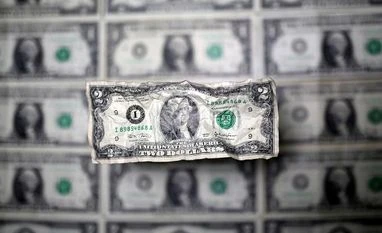 "Dollar struggles after global central banks show their hands")
WebinarsNew
Deep DiveNew
Explore Business Standard
After a turbulent week, the dollar index was little changed on the day
The dollar remained under pressure on Friday at the end of a week in which major central banks laid out plans to unwind pandemic-era stimulus, with the Bank of England surprising markets with a rate hike.
The different paths underline deep uncertainties about how the fast-spreading Omicron variant of the coronavirus will hit the global economy, and the central banks' differing views on an inflation surge that is landing hard in the United States and Britain, but less so in Europe and particularly Japan.
After a turbulent week, the dollar index was little changed on the day at 96.005, while the euro and sterling broadly consolidated the previous two days' gains to stand at $1.13310 and $1.33130 respectively.
"It seems the Fed pencilling in three hikes for 2022 and (sounding) optimistic about the economic prosperity - even in the face of Omicron - has allowed other central banks the ability to take a more hawkish turn," Chris Weston, head of research at brokerage Pepperstone, wrote in a report.
The dollar index - which tracks the greenback against six rivals - has lost around 1% since Wednesday, when the Federal Reserve said it would end bond buying in March and paved the way for three quarter-percentage-point rate hikes next year.
The Bank of England become the first G7 economy to raise rates since the pandemic on Thursday while the European Central Bank announced the end of its pandemic emergency asset-buying scheme next March, albeit while promising copious support for as long as needed via its long-running Asset Purchase Programme.
The yen nudged 0.1% higher to 113.55 yen, after the Bank of Japan on Friday dialled back emergency pandemic-funding but maintained ultra-loose policy, cementing expectations it will remain among the most dovish central banks.
The Swiss franc also edged up 0.1% on the day to 0.91815, banking Thursday's gains after the Swiss National Bank also stuck to its ultra-loose monetary policy.
(Reporting by Iain Withers, Additional reporting by Kevin Buckland in Tokyo; Editing by Kirsten Donovan)
(Only the headline and picture of this report may have been reworked by the Business Standard staff; the rest of the content is auto-generated from a syndicated feed.)
First Published: Dec 17 2021 | 5:26 PM IST


 Connect with us on WhatsApp