Elon Musk's latest challenge: Making Twitter's numbers work

Financially speaking, the billionaire's buyout of the social media network for $44 billion breaks all the usual rules
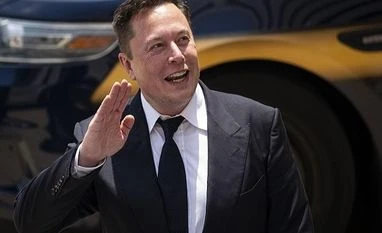
Elon Musk
Elon Musk is departing from the traditional private equity playbook by putting up far more of his own money than is usual in such a deal
Anupreeta Das & Lauren Hirsch | NYT
3 min read Last Updated : May 02 2022 | 12:19 AM IST
At the peak of the buyout boom in 2007, private equity firms including Kohlberg Kravis Roberts bought the Texas energy giant TXU for $45 billion. It was and remains the largest deal of its kind in American history.

Now, a single billionaire is inching toward that record. Elon Musk, the world’s richest person, said this past week that he would pay roughly $44 billion to take Twitter private. If the deal closes, it would become the country’s second-largest buyout on record.

Musk is departing from the traditional private equity playbook by putting up far more of his own money than is usual in such a deal, about three quarters of the price. But he’s also following more standard practice for what Wall Street calls a leveraged buyout, borrowing $13 billion that would be transferred onto Twitter’s books.

In other words, his plan for Twitter includes both more cash than the typical buyout and more debt than Twitter may be able to handle, given its patchy profitability.

 If less restrictive moderation of content on the platform leads to more unfiltered exchanges and misinformation, Twitter’s main source of revenue — advertising — could suffer, since most advertisers are wary of associating their brands with polarising content. And the firm doesn’t yet have other meaningful sources of revenue, although it has experimented with subscriptions. If advertising revenue falls, Twitter, which employs more than 7,000 people, could struggle to make interest payments.  The acquisition is also a big financial risk for Musk, more than usual for private equity-style buyers who often limit their exposure by using mostly borrowed money instead of cash. Because of the way the acquisition is structured, a downturn in Twitter’s fortunes could stretch even Musk’s considerable financial resources — and challenge his reputation for business savvy.

 Any trouble at Twitter could force Musk to draw on his stock in the electric carmaker he runs to plug potential holes. And any problem at Tesla that caused its stock to fall far enough could trigger clauses in Musk’s personal loans that would require him to add more collateral, limiting his ability to invest in Twitter.

Musk will ultimately be judged on whether he can make the numbers add up. Will his unusual financing plan secure Twitter’s future and prove critics wrong or seal its fate and squander a big chunk of his fortune?

Twitter’s earnings before interest, taxes, depreciation and amortisation, or Ebitda — a key measure of its capacity to service its debt — is roughly $1 billion a year. The typical leveraged buyout puts debt worth six times a firm’s Ebitda on its balance sheet, according to LCD, a data service. The debt in Musk’s proposal is twice as high.

This structure is risky because a firm can buckle under a heavy debt load. It is also potentially lucrative because the use of borrowed money — “leverage” in industry terms — can increase the financial returns if the buyers eventually take the company public again or sell it to a new buyer at a higher price.

If the deal maths becomes unpalatable for Musk, he has an out: a breakup fee of $1 billion. For a man with an estimated fortune well over $200 billion, that’s a small price to pay.

©2022 The New York Times News Service 

One subscription. Two world-class reads.

Already subscribed? Log in

Subscribe to read the full story →
*Subscribe to Business Standard digital and get complimentary access to The New York Times

Smart Quarterly

₹900

3 Months

₹300/Month

SAVE 25%

Smart Essential

₹2,700

1 Year

₹225/Month

SAVE 46%
*Complimentary New York Times access for the 2nd year will be given after 12 months

Super Saver

₹3,900

2 Years

₹162/Month

Subscribe

Renews automatically, cancel anytime

Here’s what’s included in our digital subscription plans

Exclusive premium stories online

  • Over 30 premium stories daily, handpicked by our editors

Complimentary Access to The New York Times

  • News, Games, Cooking, Audio, Wirecutter & The Athletic

Business Standard Epaper

  • Digital replica of our daily newspaper — with options to read, save, and share

Curated Newsletters

  • Insights on markets, finance, politics, tech, and more delivered to your inbox

Market Analysis & Investment Insights

  • In-depth market analysis & insights with access to The Smart Investor

Archives

  • Repository of articles and publications dating back to 1997

Ad-free Reading

  • Uninterrupted reading experience with no advertisements

Seamless Access Across All Devices

  • Access Business Standard across devices — mobile, tablet, or PC, via web or app

Topics :Elon MuskTwitter

Next Story



