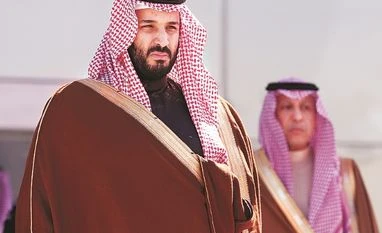
As the new heir apparent to the throne of Saudi Arabia, Prince Mohammed bin Salman will play an even more influential role in world oil markets at a time when big crude-producing nations are struggling to prop up prices.
Prince Mohammed, who was named crown prince on Wednesday, has upended the traditional Saudi energy model in the nearly two and a half years since his father ascended the throne. Whereas the royal family had previously been content to leave the running of the oil industry to seasoned technocrats, the prince has sought to exert influence over the country’s huge energy resources.
With the kingdom’s economy suffering from weakened oil markets, Saudi Arabia, with the prince’s backing, has been a leading force behind the effort by the Organization of the Petroleum Exporting Countries to bolster prices by limiting production. It is a complicated task with prices continuing to fall, as American shale oil producers and Libya add to the glut of supplies.
Domestically, Prince Mohammed has sought to consolidate control over the energy sector. He has brought in Wall Street bankers to organise an initial public offering of the national oil company, Saudi Aramco, which is likely to value the enterprise at hundreds of billions of dollars. And he has replaced the country’s longtime oil minister, replacing him with a more pliant hand who has become crucial to fulfiling the prince’s plans.
Supporters say the 31-year-old prince will bring youthful energy and a fresh eye to the kingdom’s most valuable export, using it to help modernise and diversify the economy. Detractors, however, charge that he is inexperienced and prone to meddling, undermining experienced officials and making sudden public pronouncements.
“The problem is he is unpredictable, and it is not clear who he is relying on for advice,” said Paul Stevens, a Middle East energy analyst at Chatham House, a research organization based in London.
Here’s how Prince Mohammed’s rise may affect oil prices, global energy production and the sale of shares in Saudi Aramco:
Oil prices are around $45 a barrel, continued their slide after the news of Prince Mohammed’s promotion. That is down 20 per cent since mid-April, and well off the levels in 2014 above $100 a barrel.
The main reason for the decline in prices, though, is that Opec’s much-trumpeted production cuts seem to be having little impact on the persistent glut of oil for sale.
The higher prices resulting from Opec cuts have prompted increased production from shale oil producers in the United States and by other rivals, undercutting the cartel’s actions.
Prince Mohammed appears to have gone back and forth on oil strategy. He initially declared that prices did not matter. But when they fell to uncomfortable levels early last year, he backed production cuts by Opec and other producers, like Russia, as a way to prop up prices.
The Saudis and Opec may now be headed for another crunch, and there do not seem to be any good options. Analysts say the most likely path is for the Saudis to persist with, or even deepen, production cuts to bolster prices and improve the environment for the Saudi Aramco IPO.
“We should be prepared for Saudi Arabia to do whatever it takes to keep the prices above” $50 a barrel, FGE, an energy consultancy, wrote in a note to clients on Wednesday. “If the IPO is to go ahead, prices cannot go below” $50 a barrel, it added.
The question is how long the Saudis can stick with a policy of reduced production if it does not result in higher prices.
In 2014, Saudi Arabia’s former oil minister Ali al-Naimi concluded that there was little point in Opec restraining production because any cuts would just be replaced by producers of shale oil.
When prices fell below $30 a barrel early last year, Mr. Naimi and other officials began pursuing temporary production restraints to prop up prices.
So far, those cuts are credited with bolstering prices and supporting the revenues of producer countries. But falling prices could push Prince Mohammed to once again consider whether output constraints serve Saudi interests.
Prince Mohammed’s elevation gives him added authority to push ahead with his pet project, overriding the objections of traditionalists who argue that only the state should own natural resources like oil.
The Saudi Aramco offering is a big part of the prince’s overall blueprint for overhauling the economy and reducing its dependence on oil, a plan known as Vision 2030.
Oil prices, though, may play a major role in the success of his ambitious undertaking: Buoyant prices would help raise more money through the IPO and help attract investment to Saudi Arabia.

 "Energy in focus after Saudi Prince's elevation")












 Connect with us on WhatsApp