Greece gets a humiliating deal, but what does it mean for the world?
If Greece can't find a way to revive GDP, which the core issue, markets will be roiled when it defaults again
Shishir Asthana Mumbai European Union members have finally managed to agree on something. After a marathon 17-hour meeting, President of the European Council
Donald Tusk said Eurozone leaders had reached an agreement in principle to start negotiations on financial aid through their bailout fund, the European Stability Mechanism.
“The decision gives Greece the chance to get back on the track for support from European partners. It also avoids the social, economical and political consequences that a negative outcome would have brought,” he added.
Greece will be given another lease of life through a bridge finance mechanism provided Greece meets the terms set out by the Eurozone members. For his part, Greek Prime Minister Alexis Tsipras agreed to European demands for immediate action to qualify for up to 86 billion euro in aid.
Tsipras had to accept a list of demand which included his government transferring 50 billion euros of state assets to a holding company that will either sell or generate cash from them. His demand for a cut in the nominal value of Greek debt was rejected. If Greece behaves and complies with the term set out then the European Union might consider reducing interest rates on the debt and increasing the repayment period.
So what does the deal mean to Greece and the world economy and markets?
Firstly, the Greece crisis was not about bailing out Greece but the bailing out the creditors, especially France and Germany, who had funded the country. Greece accounts for only 2% of the Eurozone’s GDP but has the highest debt-to-GDP ratio.
Greece’s problem was not rising debt but the shrinkage in GDP which fell by 25% over the last five years which made the debt to GDP ratio look dangerous. Further, Greece’s payment of its debt per annum stands at 2.6%, which is a very small portion of its GDP. But since its GDP crashed and expenses remained the same the crisis blew up. The present deal does not answer the core of the problem: GDP growth and how to revive it.
For the Eurozone however, the deal is beneficial as they have bought themselves some breathing space till the next time Greece is approaching default. The stringent norm suggested by the members will ensure that Greece’s problem are not getting solved with the current deal but will only be delayed. Further, spending cuts and increase in taxes are going to impact growth in Greece.
There is a lot of anger in the streets of Greece and other European countries in the way the country has been humiliated. Under the latest deal, EU members’ decision to keep Euro 50 billion worth of Greece’s assets out of the country’s reach has resulted in renewed resentment. The deal is a harsher version of what the people had already rejected.
Analysts in Europe too have called the deal harsh and one that will do more harm to Greece than good. Commenting on the deal
Marc Ostwald, strategist at ADM Investor Services International said that the “highlights of the deal are that there is no long-term future for the Eurozone and the desire on the part of Eurozone creditor nations to completely destroy the Greek economy — it can certainly be asserted that this is indeed a worse deal than the 1919 Treaty of Versailles”.
For the world markets, Greece will be a local issue and not hog the limelight, till the next time it is ready to default.

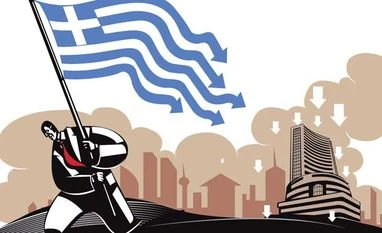 "Greece gets a humiliating deal, but what does it mean for the world?")


