Energy ministers from five Arab Gulf oil-producing nations met Sunday to discuss efforts to stabilise crude markets amid Opec’s drive to enlist Russia’s cooperation in limiting output to prop up prices.
Ministers from Saudi Arabia, Kuwait, Bahrain, Qatar and the United Arab Emirates gathered in Riyadh for oil talks at the offices of the Gulf Cooperation Council secretariat. Russian Energy Minister Alexander Novak was also to visit the Saudi capital on Sunday and was expected to speak at a news conference to be held after the GCC talks. Oman was the only one of the GCC’s six members not attending.
“Oil markets are on the way to being re-balanced,” Saudi Arabia’s Energy and Industry Minister Khalid Al-Falih said at the start of the meeting. “Low oil prices are putting pressure on GCC countries’ development plans.” Russia was invited to attend the Gulf ministers’ talks, he said. “We are working with Russia and other oil producers to stabilise the market.” Novak is set to meet Opec representatives on Monday in Vienna for talks that could include production cuts, and officials from Russia and Saudi Arabia will hold bilateral discussions later this month. While Russian President Vladimir Putin has pledged to cooperate with the Opec, he’s been vague about whether the country will trim output or just freeze production at September’s post-Soviet record.
OPEC is seeking to attract other producers to join the plan it agreed to last month at a meeting in Algeria to put into effect the group’s first output cuts in eight years. Crude plunged to a 12-year low in January, squeezing the budgets of producers from Venezuela to Saudi Arabia. The price slide led OPEC to abandon its two-year-old Saudi-led policy of allowing members to pump as much as they could in an effort to protect market share.
“We hope that they can reach an overall agreement on which Russia and other non-OPEC producers will join and cooperate with OPEC members,” Iranian Oil Minister Bijan Namdar Zanganeh told reporters on Sunday in Tehran.
Russia is producing about 10.9 million barrels a day on average this year, according to Energy Ministry data. Officials have emphasised the nation’s ability to keep pumping; the latest draft of Russia’s energy strategy sees a potential increase in annual production from 534.1 million metric tons last year to 555 million tons, or 11.1 million barrels a day, by 2020.
OPEC’s 14 members pumped a record 33.75 million barrels a day in September, with the Saudis accounting for 10.58 million barrels, according to data compiled by Bloomberg. Output in Saudi Arabia, the group’s biggest producer, fell short of the 10.66 million-barrel-a-day record in July, the data compiled by Bloomberg show.
Brent crude, the global benchmark, has gained almost 40 per cent this year, trading at about $52 a barrel last week. OPEC is trying to determine which members will reduce their output and by how much, with details to be made final at the group’s November 30 meeting. Bloomberg

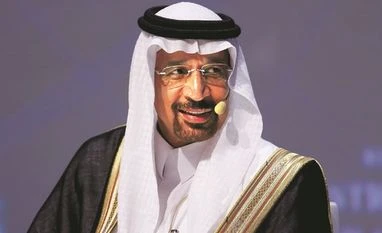 "Gulf energy ministers meet in Riyadh")


 Connect with us on WhatsApp