How does Japan define 2018? With a Chinese character meaning 'disaster'

Throughout 2018, Japan endured a steady series of hammer blows
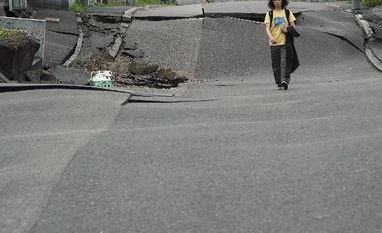
Japan earthquake
: A resident walks on an earthquake-damaged street in Kiyota, outskirts of Sapporo city, Hokkaido, northern Japan | Photo: AP/PTI
Nevin Thompson | Global Voices
Last Updated : Dec 17 2018 | 10:43 AM IST
After a year of earthquakes, torrential rains, floods, typhoons and torrid heat, the Chinese character meaning “disaster” ( 災: “wazawai” or “sai”) was named as Japan's “2018 Kanji of the Year”. Chinese characters are known as kanji (漢字) in Japan.

This year's kanji was selected by the Japanese Kanji Proficiency Society based on the results of a nationwide poll conducted earlier in the fall. Of the 193,214 entries submitted from all Japan, “wazawai” received the most ballots at 20,858.

Throughout 2018, Japan endured a steady series of hammer blows, including:
  • A massive snowfall that all but shut down towns along the Japan Sea coast for nearly a week
  • An earthquake in June that seriously damaged some parts of Osaka and neighboring cities
  • Widespread deadly flooding in July after much of western Japan received incredible amounts of torrential rain that broke all historical records
  • Record-breaking heat for much of the summer that resulted in thousands of deaths
  • Another earthquake in September, this time in southern Hokkaido, that left millions without power for up to three days and disrupted the economy of the island
  • The strongest typhoon in 25 years, which shut down Osaka's main international airport for nearly a week
In a news release, the Kyoto-based Japanese Kanji Proficiency Society explained that “disaster” was a suitable symbol for 2018 in Japan because the kanji character touched people's lives in different ways:

"Since, all over Japan, no one knew when calamity (災害) might strike, the number of people who decided to take personal responsibility for disaster preparedness (防災) increased. And since no one could forget the calamities that afflicted Japan, it was a year when many wanted to learn more about how to reduce the effects of natural disasters (減災).

Each December, the Kanji of the Year is announced at historic Kiyomizu-dera, a temple and UNESCO world heritage site in Kyoto, first established 1,300 years ago. Reverend Mori Seihan, the chief abbot of the temple, typically unveils the Kanji of the Year by writing it in traditional calligraphy, captured in this video of the 2018 ceremony:

As Japan prepares for the abdication of its current emperor in May 2019, thereby ending the Heisei Era as it makes the transition to a new emperor, the second most popular Chinese character in this year's poll was “hei” (平). “Hei” is one of two kanji that make up “Heisei” (平成), the name of the reign of the current Emperor of Japan, who is typically known in the rest of the world as Akihito:

While the most popular character was “wazawai”, number-two was “hei” (平) with some commentators stating it is the end of the Heisei (平成) Era in Japan. For many others, the 2018 PyeongChang (written as 平昌 in Japanese) Olympics and the 2018 US-Korea summit that sought peace (平和) were positive aspects of the past years. We hope that the next year will be one for which a positive and bright kanji character can be chosen. 

— 2018 Kanji of the Year.


This article, written by Nevin Thompson, was published on Global Voices on December 15, 2018

One subscription. Two world-class reads.

Already subscribed? Log in

Subscribe to read the full story →
*Subscribe to Business Standard digital and get complimentary access to The New York Times

Smart Quarterly

₹900

3 Months

₹300/Month

SAVE 25%

Smart Essential

₹2,700

1 Year

₹225/Month

SAVE 46%
*Complimentary New York Times access for the 2nd year will be given after 12 months

Super Saver

₹3,900

2 Years

₹162/Month

Subscribe

Renews automatically, cancel anytime

Here’s what’s included in our digital subscription plans

Exclusive premium stories online

  • Over 30 premium stories daily, handpicked by our editors

Complimentary Access to The New York Times

  • News, Games, Cooking, Audio, Wirecutter & The Athletic

Business Standard Epaper

  • Digital replica of our daily newspaper — with options to read, save, and share

Curated Newsletters

  • Insights on markets, finance, politics, tech, and more delivered to your inbox

Market Analysis & Investment Insights

  • In-depth market analysis & insights with access to The Smart Investor

Archives

  • Repository of articles and publications dating back to 1997

Ad-free Reading

  • Uninterrupted reading experience with no advertisements

Seamless Access Across All Devices

  • Access Business Standard across devices — mobile, tablet, or PC, via web or app

Next Story



