Brexit talks on the edge; Angela Merkel holds key to a deal or no-deal

Johnson asks UK to prepare for the latter; UK-based Indian businessmen hope a compromise will be found
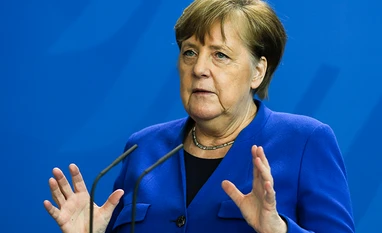
Angela Merkel
File Photo of German Chancellor Angela Merkel during a media briefing. Credits: PTI
Ashis Ray London
4 min read Last Updated : Oct 17 2020 | 12:53 AM IST
German Chancellor Angela Merkel, often hailed as the 'Empress of Europe', holds the key to Britain exiting from the European Union with or without a trade agreement. The matter reached a crisis point on Friday after a statement by EU heads of government on Thursday, following a summit in Brussels, called on the United Kingdom “to make necessary moves to make an agreement possible”. In other words, it put the onus on the UK to make concessions to save the faltering negotiations.

As expected, British Prime Minister Boris Johnson reacted indignantly to the EU’s stance. Now is the time for businesses to get ready for a no-deal, he roared. “They (the EU) are not willing unless there’s some fundamental change of approach to offer this country the same terms as (the free trade agreement with) Canada,” he added.

He continued: “So, with high hearts and complete confidence we will prepare to embrace the alternative and we will prosper mightily as an independent free trading nation controlling our own borders, our fisheries and setting our own laws.” The response, though, notably fell short of cancelling the talks. He also admitted to “progress on social security, aviation and nuclear cooperation”.

Ursula von der Leyen, President of the European Commission, had flagged fisheries and a level playing field for the two sides being persisting sticking points. She and Johnson studied at the same school in Brussels, thus raising hopes of a potential rapport between the two. More importantly, she was, prior to occupying her present position, Minister of Defence in Merkel’s government.

The powerful but soft-spoken Merkel waded in on Thursday night itself before Johnson’s predictable reaction. In characteristically carefully considered remarks, she stated: “In some places things have moved well, in other places there is still a lot of work to be done.” She went on: “We have asked the United Kingdom to remain open to compromise, so that an agreement can be reached. This of course means that we (the EU), too, will need to make compromises.” In the final reckoning, Merkel’s persuasion could be decisive.
 
Another major player on the EU side is obviously the French President Emmanuel Macron. Access to British waters – currently available – to his country’s fishermen is France’s key demand. He is said to have instigated EU leaders to inform the UK to swallow the union’s conditions or face a no-deal departure.  

In a roller-coaster ride the British pound depreciated against other currencies after Johnson’s comments, but recovered to above Friday’s pre-trading value when European leaders confirmed the dialogue would continue in London next week.      
 
Gopi Hinduja, co-chairman of the London-headquartered multi-billion Hinduja Group, felt: “A good deal between the UK and the EU will facilitate bilateral trade agreements with both for India.” His opinion on the apparent impasse was: “It could be negotiating tactics, at the same time the issues are very complicated.”     

Karan Bilimoria, a crossbench peer and now President of the Confederation of British Industries as well as chairman of Cobra Beer, emphasised: "With tenacity, common sense and compromise, a deal is still possible. Businesses call on leaders on both sides to stay at the table and find a route through." He pointed out that a deal would enable an agreement on data, which according to him is "so vital for the UK's 80 per cent services economy". 

Lord Rami Ranger, a peer representing Johnson's Conservative party and chairman of trading house Sun Mark Limited, was of the view: "The EU would like to make an example of Britain, so that other member states cannot leave the union with impunity."    

The deadline to arrive at a deal is December 31 next, which is when the transition period ends. But unless concurrence is reached by the end of this month, it may be logistically challenging to complete the necessary formalities, including ratification by both the European and British parliaments. 

One subscription. Two world-class reads.

Already subscribed? Log in

Subscribe to read the full story →
*Subscribe to Business Standard digital and get complimentary access to The New York Times

Smart Quarterly

₹900

3 Months

₹300/Month

SAVE 25%

Smart Essential

₹2,700

1 Year

₹225/Month

SAVE 46%
*Complimentary New York Times access for the 2nd year will be given after 12 months

Super Saver

₹3,900

2 Years

₹162/Month

Subscribe

Renews automatically, cancel anytime

Here’s what’s included in our digital subscription plans

Exclusive premium stories online

  • Over 30 premium stories daily, handpicked by our editors

Complimentary Access to The New York Times

  • News, Games, Cooking, Audio, Wirecutter & The Athletic

Business Standard Epaper

  • Digital replica of our daily newspaper — with options to read, save, and share

Curated Newsletters

  • Insights on markets, finance, politics, tech, and more delivered to your inbox

Market Analysis & Investment Insights

  • In-depth market analysis & insights with access to The Smart Investor

Archives

  • Repository of articles and publications dating back to 1997

Ad-free Reading

  • Uninterrupted reading experience with no advertisements

Seamless Access Across All Devices

  • Access Business Standard across devices — mobile, tablet, or PC, via web or app

Topics :BrexitBrexit dealBoris JohnsonAngela MerkelEuropean Union

Next Story



