India stops buying sunoil as Ukraine conflict affects shipments: Dealers

About 380,000 tonnes of sunflower oil shipments from Black sea region to India are stuck at ports and with producers. New purchases have stalled after ports suspended operations post Ukraine crisis.

Global Supply Chain
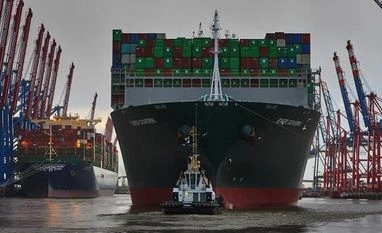
India stops buying sunoil as Ukraine conflict affects shipments; (Photo: Bloomberg)
Reuters Mumbai
2 min read Last Updated : Feb 25 2022 | 12:58 PM IST
About 380,000 tonnes of sunflower oil shipments from the Black sea region to India are stuck at ports and with producers, and new purchases have stalled after ports suspended operations following Russia's invasion of Ukraine, four dealers told Reuters.
 
There is no clarity when loading of the cargoes - worth $570 million at current prices - from Ukraine and Russia will resume, pushing Indian buyers to replace sunoil with soyoil and palm oil for March and April shipments, dealers said.

The Black Sea region accounts for 60% of world sunoil output and 76% of exports, and India is the top global edible oil importer.
New Delhi's pivot to alternate oils could further support Malaysian palm oil and U.S. soyoil futures, which are already trading near record highs.
 
India has contracts for about 510,000 tonnes of sunoil from Black Sea region for shipments in February and March, but only 130,000 tonnes have been loaded so far in February, dealers said. "We don't know what will happen to the remaining quantity. When it will be shipped," Govindbhai Patel, managing director of trading firm G.G. Patel & Nikhil Research Company, told Reuters.

Although India buys palm oil from Indonesia and Malaysia, it mainly imports soyoil from Argentina and Brazil, and sunflower oil from Russia and Ukraine. The shipment delays could create a sunflower oil scarcity in India if loading is not resumed in the next few weeks, said Sandeep Bajoria, chief executive of Sunvin Group, a vegetable oil brokerage and consultancy firm.
 
India imported 125,024 tonnes of sunoil in November 2021, 258,449 tonnes in December 2021, and 307,684 tonnes in January 2022, according to data from the Solvent Extractor's Association (SEA). The country, which gets more than two-thirds of its edible oil supplies through imports, buys about 1.25 million tonnes of cooking oil every month.
 
Palm oil is usually the dominant oil used in India, but importers have had to buy more soyoil and sunflower oil this year due to reduced supplies of palm oil from top exporter Indonesia, which pushed palm prices to record highs. Soyoil supplies are also limited as drought has hit soybean crops in South America. This could force Indian buyers to make more purchases of U.S. soyoil, a New Delhi-based dealer said.

One subscription. Two world-class reads.

Already subscribed? Log in

Subscribe to read the full story →
*Subscribe to Business Standard digital and get complimentary access to The New York Times

Smart Quarterly

₹900

3 Months

₹300/Month

SAVE 25%

Smart Essential

₹2,700

1 Year

₹225/Month

SAVE 46%
*Complimentary New York Times access for the 2nd year will be given after 12 months

Super Saver

₹3,900

2 Years

₹162/Month

Subscribe

Renews automatically, cancel anytime

Here’s what’s included in our digital subscription plans

Exclusive premium stories online

  • Over 30 premium stories daily, handpicked by our editors

Complimentary Access to The New York Times

  • News, Games, Cooking, Audio, Wirecutter & The Athletic

Business Standard Epaper

  • Digital replica of our daily newspaper — with options to read, save, and share

Curated Newsletters

  • Insights on markets, finance, politics, tech, and more delivered to your inbox

Market Analysis & Investment Insights

  • In-depth market analysis & insights with access to The Smart Investor

Archives

  • Repository of articles and publications dating back to 1997

Ad-free Reading

  • Uninterrupted reading experience with no advertisements

Seamless Access Across All Devices

  • Access Business Standard across devices — mobile, tablet, or PC, via web or app

Topics :Russia Ukraine ConflictUkraine

Next Story





