Japan exports fall in Nov for 24th straight month in record decline stretch
Japan's exports fell in November, dashing expectations for an end to the two-year run of declines, largely due to weaker US- and China-bound shipments and suggesting a slower pace of recovery
Reuters TOKYO By Daniel Leussink
TOKYO (Reuters) - Japan's exports fell in November, dashing expectations for an end to the two-year run of declines, largely due to weaker U.S.- and China-bound shipments and suggesting a slower pace of recovery for the world's third-largest economy.
The trade data is likely to be of some concern for policymakers counting on solid external demand to boost factory output and broader corporate activity to revive the economy.
Ministry of Finance (MOF) data out on Wednesday showed exports fell 4.2% in November from a year earlier, defying the economists' median estimate of a 0.5% increase in a Reuters poll. It was the 24th straight month of decline, the longest stretch on record, and follows a 0.2% drop in the previous month.
"Overall exports won't return to pre-virus levels until the middle of next year," said Tom Learmouth, Japan economist at Capital Economics.
By destination, shipments to the United States contracted for the first time in three months, losing 2.5%, as weak demand for aircraft equipment helped offset higher car exports.
Exports to China, Japan's largest trading partner, rose at the slowest pace in five months, growing 3.8%, driven by communication devices.
Shipments to Asia as a whole fell back into contraction for the first time in two months, losing 4.3%, while those to the European Union dropped 2.6% in November.
Imports shed 11.1% in November compared with the same month a year earlier, versus the median estimate for a 10.5% decrease, bringing a trade surplus of 366.8 billion yen ($3.54 billion), versus the median estimate for a 529.8 billion yen surplus.
Japan's cabinet on Tuesday approved a third supplementary budget to fund a fresh $708 billion stimulus package, which includes about 40 trillion yen in direct fiscal spending and focuses on investment in new growth areas such as green and digital innovation.
Data last week confirmed the economy rebounded sharply in the third quarter from its biggest postwar slump in April-June.
(Reporting by Daniel Leussink; Editing by Sam Holmes)
(Only the headline and picture of this report may have been reworked by the Business Standard staff; the rest of the content is auto-generated from a syndicated feed.)

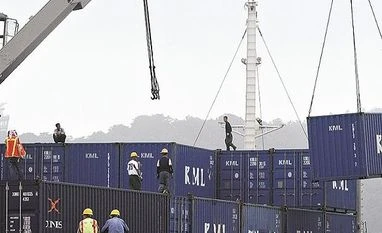 "Japan exports fall in Nov for 24th straight month in record decline stretch")


