Japan upgrades Fukushima leak to highest level in two years
At its height, the Fukushima crisis was classified as level seven -- one of only two events ever rated in that category along with the Chernobyl disaster a quarter of a century ago
AFPPTI Tokyo Japan declared a radioactive water leak at the crippled Fukushima plant a level-three "serious incident" today, its highest warning in two years, as operators scrambled to seal a tank that has seeped 300 tonnes of toxic water.
The leak is the worst since the nuclear crisis began in March 2011, when a quake-generated tsunami knocked out reactor cooling systems and sparked meltdowns.
"Something that we were very much concerned about has occurred," Nuclear Regulation Authority chairman Shunichi Tanaka told a meeting in Tokyo. "We are in a situation where there is no time to lose."
The regulator raised the assessment on the United Nations' seven-point International Nuclear Event Scale (INES) to a level three "serious incident", from level one which indicates an "anomaly".
At its height, the Fukushima crisis was classified as level seven -- one of only two events ever rated in that category along with the Chernobyl disaster a quarter of a century ago.
Other incidents which have been ranked level three include the 2005 radioactive waste leak at the British nuclear reprocessing facility in Sellafield.
The Japanese regulator will now inform the International Atomic Energy Agency about the leak and consult with the UN body over the accuracy of its assessment, officials said.
The evaluation came a day after plant operator Tokyo Electric Power Company (TEPCO) said some 300 tonnes of radioactive water was believed to have leaked from one of the tanks that hold water used to cool the reactors.
TEPCO said the leak was thought to be continuing today and it had not yet pinpointed the source, but that there were no significant changes in radiation levels outside the plant.
"We are removing the soil contaminated with the leaked water, while sucking the remaining water from the troubled tank," a TEPCO spokesman said.
"We are also hurriedly checking if similar troubles happen to some 350 tanks of the same type," he said.
"We are trying our best not to spread the contamination to areas outside the facility, including the sea," the spokesman added.
On the Tokyo Stock Exchange, shares in TEPCO plunged 9.28 per cent to 557 yen in the wake of the latest assessment, even as the benchmark Nikkei index closed 0.21 per cent higher.
TEPCO has faced a growing catalogue of incidents at the plant including several leaks of radioactive water, as it grapples with the world's worst nuclear disaster in a generation.
The company -- which faces huge clean-up and compensation costs -- has struggled to handle a massive amount of radioactive water accumulating as a result of continuing water injections to cool reactors.

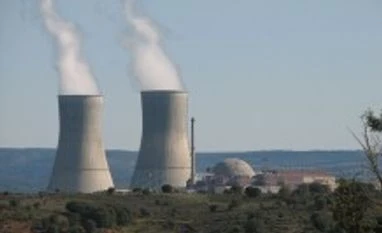 "Japan upgrades Fukushima leak to highest level in two years")


 Connect with us on WhatsApp