
Japanese PM may curb tourism campaign to fight virus as approval drops
Suga may temporarily halt the travel campaign to the capital Tokyo and the city of Nagoya, the large industrial hub of Aichi prefecture, the prime minister's office said
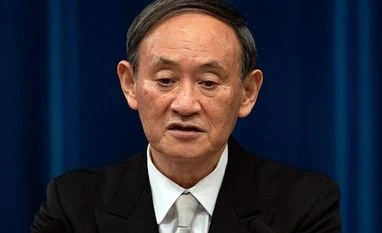 "Japanese PM may curb tourism campaign to fight virus as approval drops")
WebinarsNew
Deep DiveNew
Explore Business Standard
Suga may temporarily halt the travel campaign to the capital Tokyo and the city of Nagoya, the large industrial hub of Aichi prefecture, the prime minister's office said
By Ju-min Park
TOKYO (Reuters) - Japanese Prime Minister Yoshihide Suga will chair a coronavirus meeting on Monday and could further restrict a travel subsidy programme in an effort to contain mounting infections, as his approval rating plummets over the handling of the pandemic.
Suga may temporarily halt the travel campaign to the capital Tokyo and the city of Nagoya, the large industrial hub of Aichi prefecture, the prime minister's office said.
The "Go To Travel" campaign, aimed at boosting regional economies and helping hotels and airlines, has been effective to some extent in stimulating demand for tourism, government spokesman Katsunobu Kato told a news conference.
But while the government aims to promote economic activity, it also wants to prevent the spread of the coronavirus, Kato added. "That balance depends on the situation in each region," he said, without elaborating further.
Despite concerns by experts that a travel campaign may in fact help spread the virus, Suga has insisted an immediate halt to the entire travel campaign is not under consideration.
Local media on Sunday flagged cuts to the travel campaign, while Osaka Governor Hirofumi Yoshimura on Saturday said he had asked the government to extend the suspension of the tourism programme imposed on the Osaka region.
While Japan has not seen the kind of massive outbreaks that have hit the United States and parts of Europe, infections have worsened as winter has set in, particularly in regions such as the northern island of Hokkaido and the city of Osaka.
The country saw more than 3,000 new infections for the first time in one day on Saturday and Tokyo, Japan's capital and largest city, confirmed 621 new cases.
Tokyo has asked bars and restaurants to close by 10 p.m. during a three-week period that ends this week. Governor Yuriko Koike is set to extend this period, Kyodo News reported.
Japan's government has paused the travel campaign only in two hardest-hit areas.
"If the economy is destroyed, then it can become serious trouble," Suga said during an online town hall on Friday.
Over the weekend, polls found public support for the prime minister has eroded over his handling of the pandemic. A Mainichi newspaper poll on Saturday had his approval rating down to 40%, a 17% point fall from last month.
Only three months in office after his predecessor Shinzo Abe abruptly resigned due to ill health, Suga has also come under pressure because of other controversies, including his rejection of scholars on a science advisory panel.
(Reporting by Ju-min Park and Takashi Umekawa; Editing by Antoni Slodkowski, Michael Perry and Himani Sarkar)
(Only the headline and picture of this report may have been reworked by the Business Standard staff; the rest of the content is auto-generated from a syndicated feed.)
First Published: Dec 14 2020 | 9:52 AM IST

