
Market rout: US stocks bounce back; Dow trades in almost 1,000-points range
The market's pullback comes amid concerns about rising bond yields and higher inflation
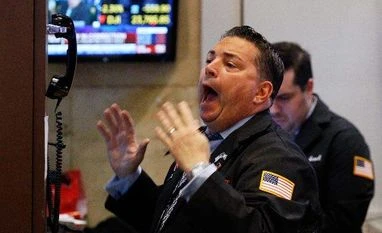 "Market rout: US stocks bounce back; Dow trades in almost 1,000-points range")
WebinarsNew
Deep DiveNew
Explore Business Standard
The market's pullback comes amid concerns about rising bond yields and higher inflation
US stocks rebounded in volatile afternoon trading on Tuesday, with major indexes up more than 1 per cent following the biggest one-day drops for the S&P 500 and the Dow in more than six years.
Stocks swung from negative to positive after indexes started the session 2 per cent lower, underscoring a return of volatility to a market that until recently was marked by an absence of major shifts. The Dow had a more than 1,000-point difference between its high and low on Tuesday.
The sharp declines in recent days marked a pullback that had been long-awaited by investors after the market minted record high after record high in a relatively calm ascent.
"It's been a crazy period and today the market is probably just trying to find some footing," said John Lynch, chief investment strategist at LPL Financial in Charlotte, North Carolina.
The Dow Jones Industrial Average rose 502.12 points, or 2.06 percent, to 24,847.87, the S&P 500 gained 42.93 points, or 1.62 percent, to 2,691.87 and the Nasdaq Composite added 139.40 points, or 2 percent, to 7,106.93.
Technology and consumer discretionary were among the top-performing sectors. Defensive sectors including utilities and real estate lagged.
The market's pullback comes amid concerns about rising bond yields and higher inflation. These were reinforced by Friday's January US jobs report that prompted worries the Federal Reserve will raise rates at a faster pace than expected this year.
Market experts said the selloff, including the overnight slide in S&P 500 futures, may have been magnified by the violent unwind of a trade betting on volatility in US stocks staying low as the CBOE Volatility index, known as the VIX, notched its biggest one-day jump on Monday in over two years.
US Securities and Exchange Commission Chairman Jay Clayton said he "can't really say" what caused the dramatic drop in stock prices during recent trading sessions, but that all signs indicate financial markets are functioning normally.
"I don't think the volatility is over," said JJ Kinahan, chief market strategist at TD Ameritrade in Chicago. "These types of moves tend to take about three weeks to get through the system."
First Published: Feb 07 2018 | 2:44 AM IST


 Connect with us on WhatsApp