New tune from Pulitzer

Pulitzer remains singularly im­portant - which makes its intricate ru­l­es and shifts of stylistic emphasis big ne­w­s in the music world

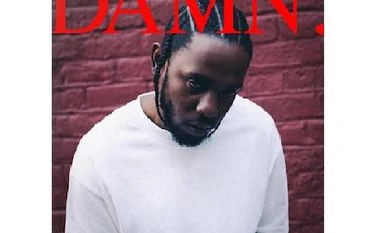
Kendrick Lamar’s album 'DAMN'
Kendrick Lamar’s album 'DAMN' | Wikipedia
William Robin | NYT
5 min read Last Updated : Apr 13 2019 | 12:33 AM IST
A year ago, shock waves rippled through the arts world when the Pulitzer Prize in Music, almost always bestowed on a classical composer, was awarded to Kendrick Lamar’s album “DAMN.”

“This is a big moment for hip-hop music and a big moment for the Pulitzers,” Dana Canedy, the prizes’ administrator, said then. “I never thought I’d be a part of it,” Mr Lamar told Vanity Fair about the prize. “It’s one of those things that should have happened with hip-hop a long time ago.”
 
It was not only the first time the prize had gone to a hip-hop work; never before had it been given to any kind of mainstream popular music. Even as Pulitzer-winning musical styles shifted over the decades, from the Americana of Copland’s “Appalachian Spring”(1945) to the fragmented atonality of Donald Martino’s “Notturno”(1974) to the joyful genre-bending of Caroline Shaw’s “Partita” (2013), the prize has remained almost exclusively the province of classical music.
 
But Mr Lamar’s Pulitzer upended all that. Was “DAMN.” a fluke, or will the prize — the 2019 winner will be announced on April 15 — genuinely embrace popular music? What now counts as a “distinguished American composition”? The music Pulitzer was established in 1943 as a celebration of homegrown art in the midst of World War II; the first winner was a briskly patriotic cantata by the Neo-Classicist William Schuman. For decades, the prize was mostly given to well-established composers: As Mr Martino once said, “If you write music long enough, sooner or later someone is going to take pity on you and give you the damn thing.”
Recently the prize has broadened in aesthetic scope and given a career boost to young composers like Ms. Shaw, who was 30 when she won. But until Mr Lamar, it had still barely budged outside of its old classical music limits. 
 
Even Mr Lamar’s path to victory last year was somewhat unusual: “DAMN.” had not been officially submitted. But during a weekend of deliberations, the five-member music jury weighed the merits of some classical submissions that drew on hip-hop influences, and came to the conclusion that hip-hop itself should be under consideration.
 
The jury introduced “DAMN.” into the process and ultimately decided it was worthy of the prize. “We’re there all day listening, reading, discussing,” one of the 2018 jurors, the jazz violinist Regina Carter, said in a recent interview. “We were all really respectful of one another and listened to each other. There was no fighting going on: We’d argue our cases, but it never got ugly.”
 
But even if SoundCloud rappers and aspiring singer-songwriters start to submit, their work still needs to be evaluated by a jury. Pulitzer juries in the past decade have typically comprised a mix of classical and jazz musicians, critics, academics and arts administrators. Will future juries give adequate attention to nonclassical submissions — or have the knowledge to properly distinguish a work of the caliber of “DAMN.” from other hip-hop entries?
 
The prize, moreover, is not actually decided by the music jurors. The jury is i­n­structed to provide the Pulitzers’ admini­strative board — which includes journali­s­ts, editors and academics, but not p­rofessional musicians — with three un­r­anked nominations. The board then de­c­ides which of the three receives the aw­a­r­d. Last year’s Pulitzer could well have go­ne to one of the other, more conventi­o­n­al finalists, the composers Ted Hearne an­d Michael Gilbertson, rather than Lamar.
 
And if a future board were to be confronted with, say, an opera by Tania León, an experimental record by Nicole Mitchell, and a visual album by Beyoncé, might its members tend to select the finalist with whom they were already most familiar? “That’s just never happened,” Ms Canedy said. “Every finalist gets its due when it comes before the board,” she added. “They do what they do, which is download the work, listen to it, debate it, and then make a decision.”
 
It’s not always that simple. In 1992, the music jury recommended only a single finalist: a work by the composer Ralph Shapey. The board demanded the jury provide a second option and, when a piece by the composer Wayne Peterson was submitted, the board chose the Peterson.
 
Angry jurors then released a statement describing the board’s decision as “especially alarming because it occurred without consultation and without knowledge of either our standards or rationale. Such alterations by a committee without professional musical expertise guarantees, if continued, a lamentable devaluation of this uniquely important award.”
 
And the Pulitzer remains singularly im­portant — which makes its intricate ru­l­es and shifts of stylistic emphasis big ne­w­s in the music world. The 2019 prize may go to a groundbreaking symphony, a conf­essional folk record or a transcendent mixtape. Speaking in late February, Ms Ca­n­e­dy said that the music jury — which will re­main anonymous until the prize is an­n­ounced — had selected three finalists.
 
“We had a diverse slate of entries,” she said. “We have three finalists that we’re incredibly proud of, and would be happy to see any of the three win a Pulitzer.”
©2019TheNewYorkTimesNewsService

One subscription. Two world-class reads.

Already subscribed? Log in

Subscribe to read the full story →
*Subscribe to Business Standard digital and get complimentary access to The New York Times

Smart Quarterly

₹900

3 Months

₹300/Month

SAVE 25%

Smart Essential

₹2,700

1 Year

₹225/Month

SAVE 46%
*Complimentary New York Times access for the 2nd year will be given after 12 months

Super Saver

₹3,900

2 Years

₹162/Month

Subscribe

Renews automatically, cancel anytime

Here’s what’s included in our digital subscription plans

Exclusive premium stories online

  • Over 30 premium stories daily, handpicked by our editors

Complimentary Access to The New York Times

  • News, Games, Cooking, Audio, Wirecutter & The Athletic

Business Standard Epaper

  • Digital replica of our daily newspaper — with options to read, save, and share

Curated Newsletters

  • Insights on markets, finance, politics, tech, and more delivered to your inbox

Market Analysis & Investment Insights

  • In-depth market analysis & insights with access to The Smart Investor

Archives

  • Repository of articles and publications dating back to 1997

Ad-free Reading

  • Uninterrupted reading experience with no advertisements

Seamless Access Across All Devices

  • Access Business Standard across devices — mobile, tablet, or PC, via web or app

Next Story