North Korea once again fires artillery rounds over South Korea's drills
North Korea on Tuesday fired a barrage of artillery rounds into waters near rival South Korea for the second consecutive day in a tit-for-tat response for the South's live-fire drills
AP Seoul North Korea on Tuesday fired a barrage of artillery rounds into waters near rival South Korea for the second consecutive day in a tit-for-tat response for the South's live-fire drills in an inland border region.
South Korea's Joint Chiefs of Staff said it detected North Korea firing around 90 artillery rounds from a front-line area along its eastern coast around 10 a.m. It said the shells, which were likely from multiple rocket launchers, landed in the northern side of a maritime buffer zone the Koreas established in 2018 to reduce border tensions.
The firings came shortly after the North Korean People's Army's General Staff said it instructed front-line units to launch artillery into the sea as a warning following South Korean artillery exercises in a region near their land border.
North Korea also on Monday fired around 130 artillery rounds into waters near the buffer zones with South Korea, while accusing the South of raising unnecessary tension in front-line areas.
The latest North Korean military action has worsened animosity between the rivals, whose relations have sharply declined amid a prolonged pause in nuclear negotiations between Washington and Pyongyang.
The South Korean army was conducting live-fire exercises involving multiple rocket launch systems and howitzers in two separate testing grounds in the Cheorwon region. They began on Monday and continue through Wednesday.
North Korea's military said it ordered Monday's artillery fire after detecting dozens of South Korean projectiles flying southeast from the Cheorwon region. That was the first time North Korea has fired weapons into the maritime buffer zones since Nov. 3, when around 80 shells landed within North Korea's side of the zone off its eastern coast.
North Korea has fired dozens of missiles as it increased its weapons demonstrations to a record pace this year, including multiple tests of an intercontinental ballistic missile system with a potential of reaching deep into the U.S. mainland, and an intermediate-range missile over Japan.
North Korea has also conducted a series of short-range launches it described as simulated nuclear attacks on South Korean and U.S. targets in an angry reaction to an expansion of joint U.S.-South Korea military exercises that North Korea views as rehearsals for a potential invasion.
Experts say North Korea hopes to negotiate economic and security concessions from a position of strength and force the United States to accept it as a nuclear power. South Korean officials have said North Korea might up the ante soon by conducting its first nuclear test since 2017.
(Only the headline and picture of this report may have been reworked by the Business Standard staff; the rest of the content is auto-generated from a syndicated feed.)

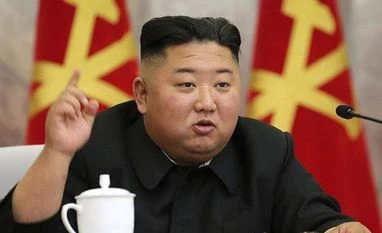 "North Korea once again fires artillery rounds over South Korea's drills")


 Connect with us on WhatsApp