North Korean leader Kim Jong Un calls for readiness against virus, typhoon
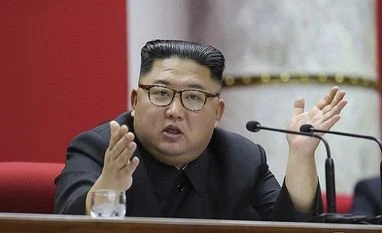
Kim Jong Un held his third high-level political conference in as many weeks, where he raised alarm about the nation's coronavirus response and a typhoon forecast to hit the country early Thursday
AP Seoul (South Korea) In a rare display of urgency, North Korean leader Kim Jong Un held his third high-level political conference in as many weeks, where he raised alarm about the nation's coronavirus response and a typhoon forecast to hit the country early Thursday.
During an enlarged meeting of the Politburo of the ruling Workers' Party on Tuesday, Kim lamented unspecified "defects" and shortcomings in the country's anti-virus campaign and urged that they be corrected swiftly, according to the North's official Korean Central News Agency said Wednesday.
Kim also called thorough preparations to minimise damage from Typhoon Bavi, which comes weeks after torrential rains caused flooding and massive damage to homes and crops, inflicting further pain to an economy ravaged by US-led sanctions over its nuclear weapons and border closures amid the pandemic.
Kim set tasks for the party and public services at every level, "saying that to thoroughly prevent the casualties by the typhoon and minimise the damage to crops is important work which can never be neglected even a moment, KCNA paraphrased the leader as saying.
Typhoon Bavi as of Wednesday morning was near the South Korean island of Jeju and was on course to hit the northwest coast of the Korean Peninsula around daybreak Thursday morning. South Korea's weather agency said it had a maximum wind speed of 155 kilometers per hour (96 mph) and was forecast as one of the strongest to hit the peninsula this year.
In another ruling party meeting last week, Kim admitted the country's economy has not improved as he had hoped. The Workers' Party cited "internal and external situations" as hurting the country's economic development, likely referring to US-led sanctions over North Korea's nuclear programme, the recent flooding and the efforts of closing the country's borders and other steps taken during the COVID-19 pandemic.
During the meeting last week, the ruling party scheduled a rare congress in January to set development goals for the next five years.
Experts say the coronavirus derailed some of Kim's major economic goals after North Korea imposed a lockdown that significantly reduced trade with China its major ally and economic lifeline and likely hampered its ability to mobilise its workforce.
The North has yet to confirm a single-case of COVID-19, but outsiders have widely doubted its virus-free claim. In late July, Kim ordered a lockdown of Kaesong, a city near the border with South Korea after the North reported it found a person with COVID-19 symptoms. It later told the World Health Organization the person's test results were inconclusive.
(Only the headline and picture of this report may have been reworked by the Business Standard staff; the rest of the content is auto-generated from a syndicated feed.)

 "North Korean leader Kim Jong Un calls for readiness against virus, typhoon")

