Omicron subvariant BA.2 may cause severe disease, lab study suggests
A Japanese team led by researchers from the University of Tokyo found that similar to BA.1, BA.2 subvariant of Omicron appears to largely escape the immunity induced by COVID-19 vaccines
Press Trust of India Tokyo The BA.2 subvariant of the Omicron coronavirus variant is not only faster at spreading, but may also cause more severe disease, a lab study suggests.
The yet-to-be peer-reviewed findings, recently posted on the preprint repository BioRxiv, show that the BA.2 sub variant may have features that make it as capable of causing serious illness as older coronavirus variants.
On Thursday, the World Health Organization (WHO) said while BA.2 is more tranmsissible than BA.1, the subvariant is not more severe.
"Among all subvariants, BA.2 is more transmissible than BA.1. However, there is no difference in terms of severity," Maria Van Kerkhova, COVID-19 Technical Lead at WHO said in a video.
In the latest study, a Japanese team led by researchers from the University of Tokyo found that similar to BA.1, BA.2 subvariant of Omicron appears to largely escape the immunity induced by COVID-19 vaccines.
"Neutralisation experiments show that the vaccine-induced humoral immunity fails to function against BA.2 like BA.1," the authors of the study said.
Omicron was first reported from Botswana and South Africa in November, 2021. Its BA.1 sub variant has since rapidly spread across the world and outcompeted other variants such as Delta.
As of February this year, another subvariant of Omicron, the BA.2 lineage, has been detected in multiple countries such as Denmark and the UK.
BA.2 has started outcompeting BA.1, suggesting that it is more transmissible than the original Omicron, the researchers said.
"Although BA.2 is considered as an Omicron variant, its genomic sequence is heavily different from BA.1, which suggests that the virological characteristics of BA.2 is different from that of BA.1," the authors noted.
When the researchers infected hamsters with BA.2 and BA.1, the animals infected with BA.2 got sicker and had worse lung function.
In tissues samples, the lungs of BA.2-infected hamsters had more damage than those infected by BA.1, they said.
"Our investigations using a hamster model showed that the pathogenicity of BA.2 is similar to that of an ancestral B.1.1 and higher than that of BA.1," the authors noted.
Similar to the original Omicron, BA.2 was resistant to antibodies in the blood of people who had been vaccinated against COVID-19.
It was also resistant to the antibodies of people who had been infected with the earlier variants of SARS-CoV-2, according to the researchers.
BA.2 was almost completely resistant to some monoclonal antibody treatments used to treat COVID-19 infection, they said.
"Together with a higher effective reproduction number and pronounced immune resistance of BA.2, it is evident that the spread of BA.2 can be a serious issue for global health in the near future," the authors added.
The reproduction number is a measure of transmission -- the average number of people infected by one infected person.
(Only the headline and picture of this report may have been reworked by the Business Standard staff; the rest of the content is auto-generated from a syndicated feed.)

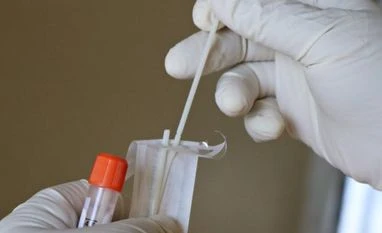 "Omicron subvariant BA.2 may cause severe disease, lab study suggests")


 Connect with us on WhatsApp