
Pakistan may see 2.7 million malaria cases in 32 districts by Jan 2023: WHO
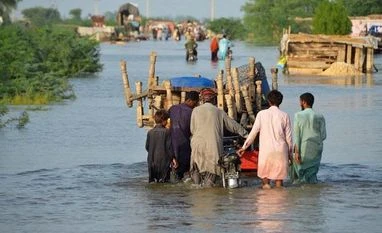
The WHO warned of 2.7 million malaria cases in flood-hit Pakistan in 32 districts by January 2023
 "Pakistan may see 2.7 million malaria cases in 32 districts by Jan 2023: WHO")
Explore Business Standard
The WHO warned of 2.7 million malaria cases in flood-hit Pakistan in 32 districts by January 2023
The World Health Organisation (WHO) on Saturday warned of 2.7 million malaria cases in flood-hit Pakistan in 32 districts by January 2023.
The organization urged international community "do a lot more" for flood-hit Pakistan. Cholera, measles and dengue outbreaks are among other diseases, reported Geo News.
Declaring Pakistan floods as Grade 3 Emergency, WHO expressed its concern over the second wave of disease outbreaks grasping the flood-stricken areas of Pakistan, The News reported.
WHO's representative in Pakistan Dr Palitha Mahipala said that they were expecting 2.7 million malaria cases in 32 districts by January 2023.
Speaking about malaria, Dr Mahipala said 32 districts of Sindh and Balochistan were "worst-affected" due to malaria where thousands of cases were daily being reported and added that they were fearing 2 million malaria cases by December and around 2.7 million cases by the end of January 2023 from these districts, reported Geo News.
"In order to prevent mortality due to malaria, WHO is providing rapid diagnostic kits and anti-malarial medicines worth USD 2.5 million while technical support is also being provided to the federal and provincial governments to deal with malaria outbreaks. As larvicidal preventive measures are not possible in flood-affected areas, prophylactic treatment and post-exposure treatments are being arranged to treat malaria patients", he maintained.
"As (WHO) director general had warned earlier, the second disaster in the shape of outbreaks of water and vector-borne diseases has begun in the flood-hit areas of Pakistan," said Dr Mahipala.
He said that there are outbreaks of Acute Watery Diarrhoea (AWD) in 46 flood-affected districts while malaria outbreaks are being reported in 32 districts, reported Geo News.
Moreover, cholera, measles and dengue outbreaks are among the other diseases which can lead to great loss if not paid immediate attention, he told reporters at a briefing at WHO Country Office in Islamabad, reported Geo News.
Terming the approaching winter as the third major challenge in the flood-affected areas, Dr Mahipala said the combination of water and vector-borne diseases and harsh winters could become extremely lethal for the millions of flood-affected people who are living along hundreds of kilometres of roads in Sindh and Balochistan.
He maintained that WHO has declared the Pakistan floods as a Grade 3 Emergency, the highest level, which means all three levels of the organisation -- the country and regional offices, as well as headquarters -- are involved in the response.
He added that WHO has appealed for USD 81.5 million to deal with disease outbreaks and to provide basic health services to the people at risk, reported Geo News.
Acknowledging the outbreaks of measles and other vaccine-preventable diseases including cholera and typhoid in the flood-affected areas, the representative said malnutrition was another serious challenge for the health authorities as mal-nourished children could become easy prey to infectious diseases and added that special campaigns were being launched to vaccinate as many children as possible in the affected districts, reported Geo News.
Responding to a query regarding the provision of clean drinking water to the affected people, he said WHO had provided 4 million aqua tablets that can make water germ free and suitable for drinking while they have established two filtrations in Sindh, adding that they would provide 1000 small filtration plants in the flood affected areas, of which 100 would be procured and installed very soon.
He further informed that WHO has started working on the renovation of 78 health facilities in the flood-affected areas, adding that WHO has pledged to renovate 200 of the most damaged health facilities in the flood-affected areas, reported Geo News.
(Only the headline and picture of this report may have been reworked by the Business Standard staff; the rest of the content is auto-generated from a syndicated feed.)
First Published: Oct 09 2022 | 1:44 PM IST


