
Pakistan seeks more int'l aid as it fails to deal with devastating floods
The environmental disaster has brought Pakistan to its knees, as millions continue to suffer in a country entirely unequipped to manage a calamity of this magnitude
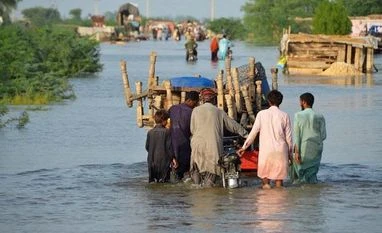 "Pakistan seeks more int'l aid as it fails to deal with devastating floods")
Explore Business Standard
The environmental disaster has brought Pakistan to its knees, as millions continue to suffer in a country entirely unequipped to manage a calamity of this magnitude
Pakistan is struggling to stay afloat after the largescale floods and torrential rains in the country this year and needs more international aid to cope with the devastating effects of the disaster, according to South Asia Press.
This comes as the UN has estimated the cost of the humanitarian response going into 2023 is USD 51.5 billion.
Next year will set another record for humanitarian relief requirements, with 339 million people in need of assistance in 69 countries, an increase of 65 million people compared to the same time last year, according to United Nations Office for the Coordination of Humanitarian Affairs (OCHA).
The South Asia Press reported that the environmental disaster has brought Pakistan to its knees, as millions continue to suffer in a country entirely unequipped to manage a calamity of this magnitude, owing largely to its political instability and inadequate economic resources.
The United Nations has said the devastation caused by the floods may no longer make headlines but for millions it's not over.
"The devastation caused by the floods in Pakistan may no longer make headlines but for millions #Its Not Over. Vulnerable groups including displaced women and children remain face many risks including of gender-based violence. Greater support is needed for their safety," UNHCR Asia Pacific said in a tweet.
Underlining the need for humanitarian assistance, the United Nations High Commissioner for Refugees (UNHCR) mission in the country said swathes of Pakistan is still underwater.
"The crisis is not over and much more support for those affected by the flooding is needed. We repeat our calls for more international help and assurances for effective aid delivery," UNHCR Pakistan tweeted.
Torrential monsoon rains triggered the most severe flooding in Pakistan's recent history, washing away villages and leaving almost 10 million children in need of immediate, lifesaving support, and at increased risk of waterborne diseases, drowning and malnutrition.
According to UNICEF, hundreds of thousands of homes have been damaged or destroyed, while many public health facilities, water systems and schools have been destroyed or damaged.
As the floodwaters have receded, the crisis has become an acute child survival crisis, the UN agency said. Frail, hungry, children are fighting a losing battle against severe acute malnutrition, diarrhoea, malaria, dengue fever, typhoid, acute respiratory infections, and painful skin conditions.
As well as physical ailments, the longer the crisis continues, the greater the risk to children's mental health.
(Only the headline and picture of this report may have been reworked by the Business Standard staff; the rest of the content is auto-generated from a syndicated feed.)
First Published: Dec 16 2022 | 7:54 AM IST


