
RCEP promise of enhanced trade will be challenged by geopolitics: Report
The RCEP, which came into force on Saturday for the majority of its 15 Asia-Pacific economies, will be challenged by Indo-Pacific geopolitics, according to a report.
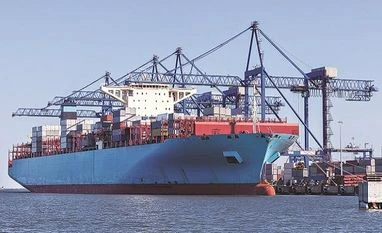 "RCEP promise of enhanced trade will be challenged by geopolitics: Report")
WebinarsNew
Deep DiveNew
Explore Business Standard
The RCEP, which came into force on Saturday for the majority of its 15 Asia-Pacific economies, will be challenged by Indo-Pacific geopolitics, according to a report.
The Regional Comprehensive Economic Partnership (RCEP), which came into force on Saturday for the majority of its 15 Asia-Pacific economies, will be challenged by Indo-Pacific geopolitics, according to a report.
The RCEP brings together the ten members of the Association of South-East Asian Nations (ASEAN) - Indonesia, Malaysia, the Philippines, Brunei, Singapore, Vietnam, Cambodia, Laos, Thailand and Myanmar - plus five of Association of South-East Asian Nations (ASEAN)'s major Free Trade Agreement (FTA) partners: China, South Korea, Japan, Australia and New Zealand.
The idea of RCEP was originally proposed by the ASEAN countries in 2011 as a way of bringing ASEAN's key FTA partners into one overarching agreement, and negotiations began in earnest in 2013.
China was the first to ratify RCEP, in April last year after it was signed in November 2020 at a virtual meeting of leaders from its 15 member countries. Indonesia, Malaysia and the Philippines have yet to do so, though they are expected to ratify it soon. Myanmar, whose government was ousted by the military on February 1, ratified it but that is pending acceptance by other members.
The United States is not a part of the agreement, even though it is in the Asia-Pacific region, and India has also pulled out of the negotiations.
Further, RCEP's commitment to regional integration will be challenged by Beijing's increased military assertiveness forcing the ASEAN member nations to join Quadrilateral Security Initiative involving, the US, Japan, India and Australia in the region, according to analysts.
Earlier, the updated version of the Quadrilateral Security Initiative called Quad 2.0 was formed on the sidelines of the November 2017 ASEAN and East Asia Summits held in Manila, the Philippines with the proposal for the maritime alliance being mooted by Japan.
Meanwhile, RCEP member nations Indonesia, Vietnam and the Philippines have contested territorial claims with China in the geopolitically significant South China Sea.
Also, despite their deep trade relations with China, ASEAN countries look to the US for strategic partnership as three ASEAN Indonesia, Malaysia, and the Philippines participated in US Democracy Summit to strengthen strategic partnership with Washington.
Meanwhile, the US is trying to re-engage with South East Asia and President Joe Biden met with leaders from the region in October last year for a virtual summit in Washington's first high-level engagement with the ASEAN in four years and announced a USD 100 million initiative to beef up Washington's engagement with the region.
(Only the headline and picture of this report may have been reworked by the Business Standard staff; the rest of the content is auto-generated from a syndicated feed.)
First Published: Jan 03 2022 | 1:12 PM IST

