
Ready to top up fiscal spending if COVID-19 hits economy: Japanese PM Abe
Abe's remarks came a day after Bank of Japan Governor Haruhiko Kuroda signalled the central bank's readiness to stabilise markets if necessary
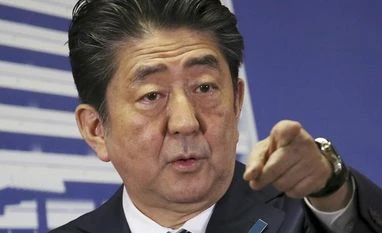 "Ready to top up fiscal spending if COVID-19 hits economy: Japanese PM Abe")
Explore Business Standard
Abe's remarks came a day after Bank of Japan Governor Haruhiko Kuroda signalled the central bank's readiness to stabilise markets if necessary
Japanese Prime Minister Shinzo Abe said on Tuesday his government was ready to deploy further fiscal stimulus measures if needed to protect the country's already fragile economy from the negative effects of the coronavirus.
Abe, who has come under fire for his handling of the crisis, has pledged to focus over the next couple weeks on halting the spread of the virus in Japan, where the number of infections has almost reached 1,000. Twelve people have died.
The outbreak comes at a critical time for Japan, raising the spectre of a potential second quarter of negative economic growth just as the country prepares to host the summer Olympic Games in July and August.
"We've already compiled a spending package to forestall various risks" funded by a supplementary budget for the current fiscal year ending in March and next fiscal year's budget, Abe told parliament on Tuesday.
"We'll scrutinise the impact of the coronavirus on the global and Japanese economies. If further steps are deemed necessary, we will take action without hesitation," he added.
Abe's remarks came a day after Bank of Japan Governor Haruhiko Kuroda signalled the central bank's readiness to stabilise markets if necessary.
The government in December approved record budget spending for the coming fiscal year, part of which will be used to fund a $122 billion fiscal package to boost growth hit by the U.S.-China trade war and an Oct. 1 sales tax hike.
The budget needs parliament approval to take effect, and is still being deliberated in the upper house of the Diet.
Abe's administration has been reluctant to sign off on fresh spending before the budget formally passes parliament, for fear of drawing criticism that its existing spending plan was insufficient to prop up the economy.
So far, government steps to deal with the epidemic have all been funded by reserves it sets aside for emergency needs.
Japan's economy suffered a contraction in the December quarter and may shrink again in the current quarter due to the health crisis, which has disrupted supply chains and hit retailers reliant on inbound tourism, analysts say.
CRITICISMS
The bulk of Japan's confirmed coronavirus cases and half the recorded deaths were passengers who caught the pathogen on the Carnival Cruises Diamond Princess cruise ship that was quarantined off the coast near Tokyo for several days last month.
Abe's handling of that incident and subsequent attempts to halt the spread of the virus have been criticised both at home and abroad.
His decision to ask schools to shut down until spring break late in March to prevent the spread of the virus has angered parents scrambling to arrange childcare.
In response, Abe said the government would create a fund to subsidise workers who had to take time off work to care for their children.
Abe, who returned to office in 2012 and is now Japan's longest-serving premier, has made hosting the Tokyo Olympics a top priority of his tenure. Officials have repeatedly denied that they are considering postponing or canceling the Games.
First Published: Mar 03 2020 | 1:15 PM IST

