Russia-Ukraine war is reshaping how Europe spends

The result is a sudden reshuffling of budgets as military spending, essentials like agriculture and energy, and humanitarian assistance are shoved to the front of the line.
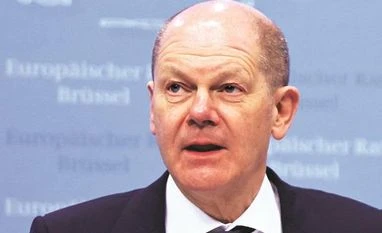
German Chancellor Olaf Scholz promised to inject $113 billion  into the country’s armed forces
German Chancellor Olaf Scholz promised to inject $113 billion into the country’s armed forces
Patricia Cohen | NYT
2 min read Last Updated : Mar 29 2022 | 11:45 PM IST
Nicolae Ciuca spent a lifetime on the battlefield before being voted in as prime minister of Romania four months ago. Yet even he did not imagine the need to spend millions of dollars for emergency production of iodine pills to help block radiation poisoning in case of a nuclear blast, or to raise military spending by 25 percent in a single year. 

“We never thought we’d need to go back to the Cold War and consider potassium iodine again,” Ciuca, a retired general, said at Victoria Palace, the government’s headquarters in Bucharest. “We never expected this kind of war in the 21st century.”

Across the European Union and Britain, Russia’s invasion of Ukraine is reshaping spending priorities and forcing governments to prepare for threats thought to have been long buried — from a flood of refugees to the possible use of chemical, biological and even nuclear weapons by a Russian leader who may feel backed into a corner.

The result is a sudden reshuffling of budgets as military spending, essentials like agriculture and energy, and humanitarian assistance are shoved to the front of the line.

The most significant shift is in military spending. Germany’s turnabout is the most dramatic, with Chancellor Olaf Scholz’s promise to raise spending above 2 percent of the country’s economic output, a level not reached in more than three decades. The pledge included an immediate injection of 100 billion euros — $113 billion — into the country’s notoriously threadbare armed forces. As Scholz put it in his speech last month: “We need planes that fly, ships that sail and soldiers who are optimally equipped.”

With prices soaring for oil, animal feed and fertiliser, Ireland introduced a “wartime tillage” program last week to amp up grain production, and created a National Fodder and Food Security Committee to manage threats to the food supply. Farmers will be paid up to €400 for every additional 100-acre block that is planted with a cereal crop like barley, oats or wheat.  Ireland reduced gasoline taxes, and approved an energy credit and a lump-sum payment for lower-income households. Germany also announced tax breaks and a $330-per-person energy subsidy, which will end up costing the treasury $17.5 billion.

One subscription. Two world-class reads.

Already subscribed? Log in

Subscribe to read the full story →
*Subscribe to Business Standard digital and get complimentary access to The New York Times

Smart Quarterly

₹900

3 Months

₹300/Month

SAVE 25%

Smart Essential

₹2,700

1 Year

₹225/Month

SAVE 46%
*Complimentary New York Times access for the 2nd year will be given after 12 months

Super Saver

₹3,900

2 Years

₹162/Month

Subscribe

Renews automatically, cancel anytime

Here’s what’s included in our digital subscription plans

Exclusive premium stories online

  • Over 30 premium stories daily, handpicked by our editors

Complimentary Access to The New York Times

  • News, Games, Cooking, Audio, Wirecutter & The Athletic

Business Standard Epaper

  • Digital replica of our daily newspaper — with options to read, save, and share

Curated Newsletters

  • Insights on markets, finance, politics, tech, and more delivered to your inbox

Market Analysis & Investment Insights

  • In-depth market analysis & insights with access to The Smart Investor

Archives

  • Repository of articles and publications dating back to 1997

Ad-free Reading

  • Uninterrupted reading experience with no advertisements

Seamless Access Across All Devices

  • Access Business Standard across devices — mobile, tablet, or PC, via web or app

Topics :Russia Ukraine ConflictEuropeBritainAgricultureGermany

Next Story



