Shadow banking still poses risks: Bernanke
The central bank was looking at asset markets closely for signs of excessive risk taking: Bernanke
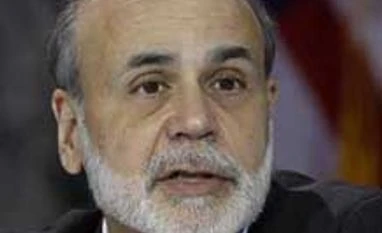
Reuters Chicago US Federal Reserve Chairman Ben Bernanke said on Friday that the shadow banking system continued to pose a threat to financial stability, and that bank funding markets might still not be able to cope with a major default.
In a wide-ranging speech explaining the Fed's role in monitoring the stability of the banking system, Bernanke also said the central bank was looking at asset markets closely for signs of excessive risk taking.
"While the shadow banking sector is smaller today than before the crisis ... regulators and the private sector need to address remaining vulnerabilities," Bernanke said at a banking conference sponsored by the Chicago Federal Reserve Bank.
The 2007-09 credit meltdown, and the collapse of investment bank Lehman Brothers, brought to light the group of firms and funding vehicles, known together as the shadow banks, that were poorly regulated but harboured large risk.
The highest grouping of US financial regulators, the powerful Financial Stability Oversight Council that is chaired by US Treasury Secretary Jack Lew, last month also warned of the possibility of runs on the shadow banking system.
Bernanke did not address a number of controversial ideas floated recently by Fed Governor Daniel Tarullo, one of which would force foreign banks that operate in the US to hold more capital here.
The Fed chairman said more work was needed to ensure the repo market - the wholesale market banks use for their everyday funding needs - could deal with the potential consequences of a default by a large borrower or a broker-dealer.
And a run on money market funds also remained a possibility, Bernanke said. He did not address the outlook for monetary policy or the economy.
Bernanke said the Fed was monitoring a wide range of asset markets for signs investors were "reaching for yield" in a way that might pose risks to the financial system, given that interest rates were so low.
Calls to cut the size of big banks - perceived to rely on taxpayer bailouts no matter how risky their business - are on the rise in Washington, and Tarullo last week discussed a number of ideas that could address the issue.

 "Shadow banking still poses risks: Bernanke")


 Connect with us on WhatsApp