Snap, the parent company of the ephemeral-message application Snapchat, on Friday revealed its own story: the video presentation it will use to pitch investors as it prepares to go public in a few weeks.
The more than 35-minute video walks viewers through Snap’s history, audience, products, revenue sources and expansion plans. The main message: Snap is a company where people have genuine, intimate and fun conversations.
Snap backed that contention with reams of data. The average user visits the Snapchat app more than 18 times a day and spends 25 to 30 minutes in it daily. About 60 per cent of users send messages, called snaps, every day. And advertisers will pay to get their messages out to Snap’s engaged users.
Beyond the investor pitch, Snap also gave insights into how and why the company created some of its products. The presentation included interviews with Evan Spiegel, the chief executive of Snap, and his fellow founder Bobby Murphy, and a more in-depth peek into the company’s culture.
Here are five key moments from the video presentation:
Snap is not just an app
Snap has called itself a camera company for years now, even though it is largely known as an app maker. Spiegel explains to viewers that this idea stems from the evolution of cameras.
What started out as hardware devices have become software products that connect to the internet. Cameras now augment the way a person communicates, he says, rather than a person’s memory. “We’re at the beginning of what cameras can do,” Spiegel tells viewers.
Snap is nostalgic
The interviews with Spiegel and Murphy were shot at Snap’s first office building, a beach bungalow near the Venice Beach boardwalk in Los Angeles.
“Our dream had always been to have an office on the beach,” Spiegel says, pointing to where he and Murphy envisioned the company’s future. “It’s pretty surreal being here,” Murphy says. “We thought it was pretty big for what we needed at the time.”
From beginning to end, the pitch video is filled with sunny shots of Venice Beach and framed photos of Snap’s early days.
Snap is smaller
Snap’s focus on communication between real friends means the network may stay relatively small and intimate. In an age when social networking has been defined by Facebook and its nearly 2 billion users, it might be hard for investors to see why a smaller network can be valuable too.
“One of the challenges we’ve encountered over time is explaining to people why bigger isn’t better,” Spiegel says.
He argues that what users have actually wanted is “a better way to communicate with the people they really cared about” rather than “more people to communicate with.”
Snap’s ability to provide that intimacy is used throughout the video to argue that its users are more engaged — and therefore a more valuable audience for marketers.
Snap is nice
The internet is filled with stories about how not nice Spiegel was in college. But in this video, he is presented as a leader who values warmth. Kind, smart and creative are the things that the company really values, Spiegel says.
What makes Snap different is “the support and love that we show towards each other,” says Mary Ritti, the company’s head of communications.
But that kindness isn’t saccharine, Spiegel tells viewers. “When I say ‘kind,’ I mean the kind of kind that compels someone to tell someone they have something stuck in their teeth,” he says.
Snap likes feelings
Near the end of the presentation, Spiegel describes how people from across the company gather every other week, sit in a circle on the floor and talk about their feelings. He says it’s “about empathy and listening.”
That moment caps the video’s message that being good listeners led Snap to take new approaches to social networking. Snapchat tells users’ stories in chronological order, rather than presenting the latest update first as Facebook and Twitter do, and forgoes the likes, shares and hearts users find elsewhere to foster a less competitive experience.
A key value of Snap, Murphy says, is “empathy with people here and empathy with our user.”
© 2017 The New York Times News Service

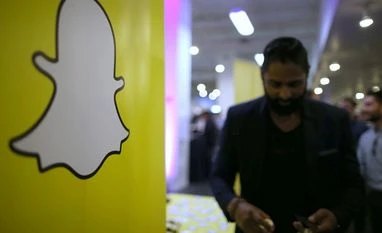 "Snap shares its past, present and future with IPO roadshow video")












 Connect with us on WhatsApp