
South Korea has key rocket launch, days after North's ICBM test
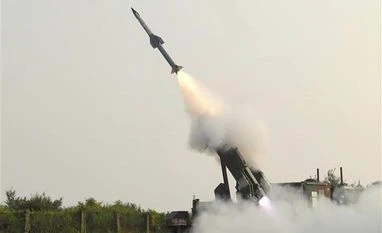
South Korea said it made its first successful launch of a solid-fuel rocket in what it called a major development toward acquiring a space surveillance capability
 "South Korea has key rocket launch, days after North's ICBM test")
WebinarsNew
Deep DiveNew
Explore Business Standard
South Korea said it made its first successful launch of a solid-fuel rocket in what it called a major development toward acquiring a space surveillance capability
South Korea said it made its first successful launch of a solid-fuel rocket Wednesday in what it called a major development toward acquiring a space surveillance capability amid rising animosities with rival North Korea.
The launch came six days after North Korea conducted its first intercontinental ballistic missile test since 2017 in an apparent attempt to expand its weapons arsenal and increase pressure on the Biden administration amid stalled talks.
South Korea's domestically built solid-propellant rocket was launched from a state-run testing facility with the presence of Defense Minister Suh Wook and other senior officials, the Defense Ministry said in a statement.
It said solid-fuel rockets have simpler structures and are cheaper to develop and manufacture than liquid-fuel rockets. It said solid-fuel rockets also reduce launch times. The statement said South Korea will soon launch a spy satellite into orbit aboard a solid-fuel rocket.
South Korea currently has no military reconnaissance satellite of its own and depends on U.S. spy satellites to monitor strategic facilities in North Korea.
In 2020, South Korea won U.S. consent to use solid fuel for space launch vehicles, a restriction that Washington had previously imposed on its key Asian ally out of concerns that its use could lead to building bigger missiles and trigger a regional arms race.
Wednesday's launch came amid tensions over North Korea's ICBM launch last Thursday, which broke its own moratorium on big weapons tests and violated multiple U.N. Security Council resolutions.
South Korea's Defence Ministry concluded earlier this week that North Korea fired the Hwasong-15 ICBM, rather than the newer, bigger, longer-range Hwasong-17 that North Korea claimed to have tested.
Coming at a very grave time following North Korea's lifting of the weapons tests moratorium, this successful test-launch of the solid-fuel space launch vehicle is a key milestone in our military's efforts to (build) a unilateral space-based surveillance system and bolster defense capability, the South Korean statement said.
The rival Koreas remain divided along a heavily fortified border since their division at the end of the World War II in 1945. To cope with North Korea's increasing nuclear threats, South Korea has been building and purchasing powerful conventional missiles, stealth fighter jets and other high-tech weapons systems. But South Korea has no nuclear weapons and it's under the protection of the U.S. nuclear umbrella, which guarantees a devastating American response in the event of an attack on its ally.
(Only the headline and picture of this report may have been reworked by the Business Standard staff; the rest of the content is auto-generated from a syndicated feed.)
First Published: Mar 30 2022 | 2:31 PM IST


 Connect with us on WhatsApp