China on Wednesday reported surprisingly weaker growth in retail sales and industrial output for April, adding pressure on Beijing to roll out more stimulus as the trade war with the United States escalates.
Clothing sales fell for the first time since 2009, suggesting Chinese consumers were growing more worried about the economy even before a U.S. tariff hike on Friday heightened stress on country's struggling exporters.
Overall retail sales rose 7.2% in April from a year earlier, the slowest pace since May 2003, data from the National Bureau of Statistics (NBS) showed. That undershot March's 8.7% and forecasts of 8.6%.
The data suggested consumers were now beginning to cut back spending on everyday products from personal care to cosmetics, and continued to shun expensive items such as cars.
"Weak retail sales partially stemmed from a deterioration in employment and declining income of the middle-and-low income groups," said Nie Wen, an economist at Hwabao Trust.
"In terms of future policies to keep consumption as the stabilizer of the economy, China might roll out targeted tax cuts or subsidies to the middle-and-low income groups."
As a whole, Chinese data for April largely pointed to a loss of momentum after surprisingly upbeat March readings raised hopes that the economy was slowly getting back onto firmer footing and would require less support.
Growth in industrial output slowed more than expected to 5.4% in April on-year, pulling back from a 4 and half year high of 8.5% in March, which some analysts had suspected was boosted by seasonal and temporary factors.
Analysts polled by Reuters had forecast that output would grow by 6.5%.
Chinese exports unexpectedly shrank in April in the face of U.S. tariffs and weaker global demand, while new factory orders from home and abroad remained sluggish.
Production of motor vehicles slumped nearly 19 percent in April, the steepest monthly decline ever. Earlier this week, industry data showed automobile sales in China fell 14.6% in April, the 10th consecutive month of decline.
"There are still uncertainties haunting the performance of the economy. Tensions between China and the U.S. have returned while concerns about insufficient demand worldwide are on the rise," Wen said.
Wen further added that China may need a more comprehensive cut in banks' reserve requirements in June before a G20 summit where Presidents Donald Trump and Xi Jinping are expected to talk trade.
"The funding gap in the market is relatively large," Nie said, adding that smaller, more targeted reductions in bank reserves may no longer be enough to spur stronger growth.
There is relatively big room for policies to support growth, Liu Aihua, a spokeswoman at the statistics bureau, told reporters at a briefing, adding that employment is expected to remain steady.
In April, the nationwide survey-based jobless rate improved to 5.0% from 5.2% in March, though analysts are generally sceptical of Chinese employment data and see a rise in layoffs if export conditions deteriorate.
INVESTMENT
Adding to worries about domestic demand, Wednesday's data also showed an unexpected stumble in investment.
Fixed-asset investment growth slowed to 6.1% in the first four months of this year. Analysts had expected it to rise to 6.4% from 6.3% in the first quarter of this year.
Growth in infrastructure spending held steady at 4.4% on-year in Jan-April, possibly reflecting a slower-than-expected payoff from Beijing's efforts to fast-track road, rail and port projects.
China is trying to engineer a construction boom to rekindle demand, even as it steps up support measures to keep cash-starved smaller companies afloat, ranging from tax cuts to financial incentives for firms which do not lay off staff.
Private sector fixed-asset investment slowed sharply to 5.5 percent growth from 6.4 percent, suggesting the sector continues to face difficulties despite central bank efforts to get more affordable loans to cash-strapped companies. The private sector accounts for the majority of jobs in China and about 60% of overall investment.
One of the few bright spots in the data was property investment, a key growth driver.
Real estate investment rose 12% in April from a year earlier, unchanged from March, according to Reuters calculations. But demand for new homes remained weak, reflecting the broader economic slowdown.
TRADE TENSIONS
Washington dramatically escalated its 10-month tariff war with Beijing on Friday by hiking levies on $200 billion worth of Chinese goods in the midst of trade talks, and Trump has threatened new levies on all remaining U.S. imports from China, sending global financial markets into a tailspin.
China retaliated on Monday, though on a smaller scale.
The two sides appear deadlocked in negotiations. However, Trump did soften his tone on Tuesday, insisting that talks between the world's two largest economies had not collapsed.
Economists at Citi estimate the U.S. tariff increase could lop 50 basis points off China's GDP growth, reduce exports by 2.7% and cost the country another 2.1 million jobs, though they are optimistic a trade deal will be reached eventually.
Analysts at BofA Merrill Lynch believe a prolonged period of brinksmanship would drag China's growth to 6.1% this year, from a near 30-year low of 6.6% in 2018.
They expect more policy easing in the short term, further cuts in banks' reserve requirements and another surge in bank lending, as well as consumer subsidies to boost sales of products such as cars, appliances and smartphones.
Some companies such as BMW [BMWG.DE] have already cut their prices after China cut the value-added tax (VAT) from April 1.

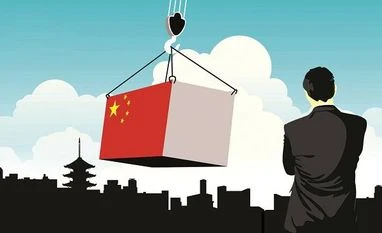 "Tariffs trigger Chinese slowdown, retail sales growth falls to 16-year low")


 Connect with us on WhatsApp