As he grapples simultaneously with the most devastating public health and economic crises of a lifetime, President Trump finds himself pulled in opposite directions on what to do next. The bankers, corporate executives and industrialists plead with him to reopen the country as soon as possible, while the medical experts beg for more time to curb the coronavirus.
The phone calls from his business friends compete against the television images of overwhelmed hospitals. The public health experts tell him what he is doing is working, so he should not let up yet. The economic advisers and others in his White House tell him what he has done has worked, so he should begin to figure out how to ease up. Tens of thousands more could die.
Millions more could lose their jobs.
“I’m going to have to make a decision, and I only hope to God that it’s the right decision,” Mr. Trump said on Friday during his daily news briefing on the fight against the coronavirus pandemic that has killed more than 18,000 Americans so far and put more than 16 million out of work.
“But I would say without question it’s the biggest decision I’ve ever had to make.”
Seizing on new estimates of a lower-than-projected death toll, the president signaled that he wanted to start resuming business on some basis after his current stay-at-home guidelines expire on April 30, and he announced that he would name a task force next week to develop a plan. But he also promised to listen to public health officials cautioning against a premature move to relax limits.
In actuality, the decision on when and how to reopen is not entirely Mr. Trump’s to make because he never ordered it closed.
The stay-at-home edicts that have kept the vast bulk of Americans indoors were issued by governors state by state. But the president did issue nonbinding guidelines urging a pause in daily life through the end of the month. And if he were to issue new guidance saying it was safe to reopen or outlining a path toward reopening, many states would most likely follow or feel pressure from their businesses and constituents to ease up on restrictions.
“We’re not doing anything until we know this country is going to be healthy,” Mr. Trump said. “We don’t want to go back and start doing it over again.”
But he added that the nation’s current paralysis was not sustainable. “You know what? Staying at home leads to death also,” he said.
“It’s very traumatic for the country.”
The number of deaths worldwide from the coronavirus topped 100,000 on Friday, as a surge of cases in Moscow pushed the Russian capital’s health care system to its limit. Lockdowns were extended across much of the globe heading into the Easter weekend, as countries desperately struggled to slow infections. The strain of people out of work and dependent on assistance was starting to show. A distribution of food turned into a bloody melee in a poor area of Nairobi, Kenya.
In the United States, the death toll has surpassed that of Spain, with only Italy reporting more. In Washington, lawmakers and administration officials made some progress in breaking a stalemate over a $250 billion federal infusion to replenish a fast-depleting loan program for distressed small businesses. Senator Chuck Schumer of New York, the Democratic leader, said that the Trump administration had agreed to bipartisan negotiations early next week.
But the central question dominating the conversation in Washington, New York and elsewhere was how long would it be until the country could begin to get back to normal. Gov. Andrew M. Cuomo of New York, the hardest hit state, said any easing of restrictions would require widespread testing to cover millions of workers first, while Mr. Trump said that “you don’t need full testing” but instead concentrated screening in the most affected areas.
New government projections presented to officials this week concluded that stay-at-home orders, school closures and social distancing have greatly reduced infections, but added that lifting them after only 30 days, as the president is considering, could result in a rash of new illnesses and fatalities that would rival doing nothing to counter the pandemic.
Without any of the mitigation policies now in place, the death toll from the coronavirus could have reached 300,000, according to the projections. But if the 30-day stay-at-home guideline is lifted, the death toll could reach 200,000, even if schools remain closed until summer, 25 percent of the country continues to work from home and some social distancing continues.
Using the demand for ventilators as a stand-in for serious coronavirus infection rates, the model foresees a modest bump immediately after stay-at-home orders are lifted and a major new increase in infections about 70 days after a shelter order is lifted, peaking after 120 days. The projections, dated Thursday, were prepared by the Departments of Homeland Security and Health and Human Services and obtained by The New York Times.
© 2020 The New York Times News Service

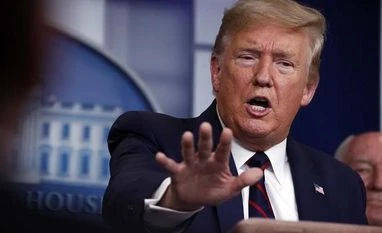 "Torn over lifting curbs, Trump faces 'biggest decision ever'")










 Connect with us on WhatsApp