The Office of Management and Budget delivered the presidential budget to Congress on Monday, and Congress reacted predictably. Democrats were quick to jump on various proposals, from cutting Medicare to privatizing the space station. And, oh, those huge deficits. Republicans didn't seem to have much of a reaction at all, and Donald Trump's morning tweets were about his infrastructure proposal, which was also rolled out today, and the threat from opioids.
As Ezra Klein points out, there's a pretty good-sized disconnect between a budget plan that slashes domestic spending and the congressional spending bill that the president endorsed and signed last week to increase that same category.
Perhaps one answer to this is to make a distinction: The plan the OMB sent to Congress is not, in any real way, the president's budget proposal. It's the proposal of OMB Director Mick Mulvaney and is the equivalent of a House Freedom Caucus document. It includes proposals that Trump has little interest in supporting or fighting for.
White House budgets in normal times are often treated with disdain by Congress, although less so during periods of unified party government. Still, no matter how often the budget is declared dead on arrival, the annual document is still normally regarded as a statement of the president's preferences and priorities.
Congressional leaders and appropriators won't treat this budget that way. They've learned that Trump is indifferent to most policy questions, inconsistent on others, and easily rolled on almost anything. They know he doesn't even bother reading his presidential daily brief -- so there's no reason to think "his" budget is anything different. It doesn't help that Trump, unlike normal presidents, didn't coordinate initiatives detailed in the budget with his State of the Union speech. The effect is to further distance the president from the budget.
In other words, Mulvaney's budget is a wasted opportunity for Trump to try to influence government policy by fighting for his priorities in Congress.
But that's only the half of it. As presidency scholar Andrew Rudalevige points out, the process behind a budget proposal is normally important as well. It's "a very important tool of executive branch management, via the sustained review process that creates it."
The White House, through the OMB (which has been part of the presidential branch since the presidency began growing in 1939), reviews the budget requests from executive-branch departments and agencies. This way the budget office gets a chance to look for evidence of malfeasance while also putting pressure on each department and agency to conform to the president's program. One of the more difficult challenges for each administration is the fight to get the executive branch to do what the president wants.
For that to happen, however, everyone involved needs to believe the OMB director speaks for the president. It's highly unlikely that anyone, from cabinet secretaries and other political appointees down to the permanent bureaucracy, believes that's the case in this administration. Not to mention that Mulvaney himself has been holding down two administration jobs in the last few months; two days a week he's acting as the director of the Consumer Financial Protection Bureau.
Trump is not the first president by any means to be negligent in managing the federal bureaucracy. It is highly unusual, however, for a president to be so apparently indifferent to whether the executive branch follows where he leads.
The effect is that every agency is on its own. It's always the case that executive-branch policymaking is a contentious battle among presidential nominees, the bureaucracy, Congress, the White House, interest groups and more. It's just that in this administration, the president is more of an uninterested bystander than a combatant.

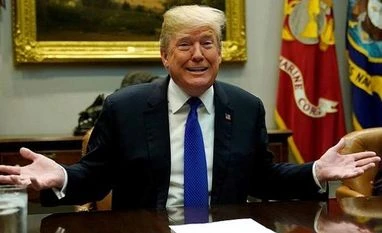 "A wasted opportunity? Who produced Trump's budget?")











