UK economy, biz huffing and puffing in just a year of Brexit

The prime minister had hailed the signing of the trade accord as the moment when Britain took back control of its destiny
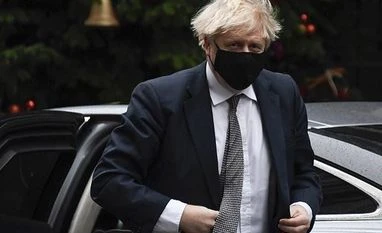
Boris Johnson
Britain's Prime Minister Boris Johnson (Photo: AP/PTI)
Joe Mayes | Bloomberg
2 min read Last Updated : Dec 23 2021 | 12:48 AM IST
In the months after Boris Johnson signed his post-Brexit trade deal with the European Union, the coronavirus masked the economic damage of leaving the bloc. As the pandemic drags on, the cost is becoming clearer — and voters are noticing.
 
Brexit has been a drag on growth. The prime minister had hailed the signing of the trade accord as the moment when Britain took back control of its destiny. But a November poll by Savanta Comres shows a majority of the British population would now vote to re-join the EU.
 
In recent days, David Frost, Johnson’s key partner in negotiating Brexit, resigned, becoming the third Brexit minister to quit.
 
A year on from the signing of the trade deal, here is a look at how Brexit affected British business and the economy.

Trade
 
Britain’s trade with the EU has declined since the country quit the bloc, with firms hit by new customs paperwork and checks.
 
As of October, UK goods trade with the EU was 15.7 per cent lower than it would have been had Britain stayed in the EU’s single market and customs union, according to modelling by the Centre for European Reform, an independent think-tank.
 

Growth
 
Even before Britain completed its split from the EU at the end of 2020, Brexit had reduced the size of the UK economy by about 1.5 per cent, according to estimates from the Office for Budget Responsibility. That was due to a fall in business investment and a transfer of economic activity to the EU in anticipation of high trade barriers.

 
Labour

Brexit has exacerbated a crunch in the UK labour supply. 200,000 European nationals left Britain in 2020, pushed away by tougher immigration rules.


Finance
 
Brexit has pushed financial firms to move at least some of their operations, staff, assets or legal entities out of London and into to the bloc — but the shift has been smaller than predicted, in part because the pandemic has hampered staff relocations. UK’s financial firms, meanwhile,  are still waiting for full access to the EU’s single market.


One subscription. Two world-class reads.

Already subscribed? Log in

Subscribe to read the full story →
*Subscribe to Business Standard digital and get complimentary access to The New York Times

Smart Quarterly

₹900

3 Months

₹300/Month

SAVE 25%

Smart Essential

₹2,700

1 Year

₹225/Month

SAVE 46%
*Complimentary New York Times access for the 2nd year will be given after 12 months

Super Saver

₹3,900

2 Years

₹162/Month

Subscribe

Renews automatically, cancel anytime

Here’s what’s included in our digital subscription plans

Exclusive premium stories online

  • Over 30 premium stories daily, handpicked by our editors

Complimentary Access to The New York Times

  • News, Games, Cooking, Audio, Wirecutter & The Athletic

Business Standard Epaper

  • Digital replica of our daily newspaper — with options to read, save, and share

Curated Newsletters

  • Insights on markets, finance, politics, tech, and more delivered to your inbox

Market Analysis & Investment Insights

  • In-depth market analysis & insights with access to The Smart Investor

Archives

  • Repository of articles and publications dating back to 1997

Ad-free Reading

  • Uninterrupted reading experience with no advertisements

Seamless Access Across All Devices

  • Access Business Standard across devices — mobile, tablet, or PC, via web or app

Topics :BritaineconomyBritish government

Next Story


