China, India, Russia and Mexico are among those predicted to cut their benchmarks even further. Only Argentina and Nigeria are forecast to raise rates.
“In the Great Financial Crisis, central banks were the only show in town. In the Covid-19 recession, they are warm up acts for ministries of finance delivering massive fiscal stimulus and healthcare systems delivering the vaccine. Looking forward, the
main challenge will be exiting extreme stimulus without disrupting financial stability.”--Tom Orlik
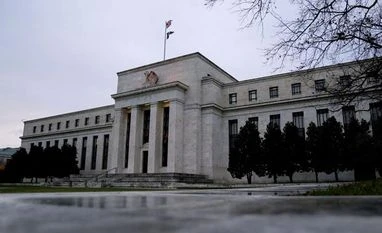
Current federal funds rate (upper bound): 0.25%
“The Fed’s efforts to adopt more qualitative guidance on interest rate policy and, more recently, asset purchases should not be construed as evidence policy makers are moving toward reducing accommodation. Rather this is a dovish-minded endeavor intended to avoid a repeat of the 2013 taper tantrum. The economy is poised for a robust recovery in 2021, particularly in the latter half, but Bloomberg Economics does not expect quantitative easing to be scaled back until 2022, leaving interest rate liftoff closer to 2025.”
Current deposit rate: -0.5%
The ECB increased its emergency bond-buying program to 1.85 trillion euros ($2.3 trillion) in December and extended it through March 2022. The 500 billion-euro boost won broad backing in the Governing Council only because President Christine Lagarde conceded that not all of that amount necessarily needed to be spent.
“The ECB’s primary tool for fighting the economic devastation reaped by Covid-19 is the Pandemic Emergency Purchase Programme. Its firepower now stands at 1.85 trillion euros. We expect buying through it to continue until the end of 2021 at a speed of about 20 billion euros per month. In addition, the Governing Council will continue to provide liquidity through its targeted longer-term refinancing operations at an interest rate that could be as low as -1%.” --David Powell
Current policy-rate balance: -0.1%
The Bank of Japan is expected to keep its main rates unchanged during the year after fine tuning its stimulus in 2020. The central bank has called for a review as it seeks ways to reduce the side effects and improve the effectiveness of its yield curve control policy. The need to make the framework more sustainable over the longer run reflects the lengthening time span for achieving its inflation goal as prices fell at the fastest pace in a decade toward the end of 2019.
Current bank rate: 0.1%
Bank of England Governor Andrew Bailey insists the BOE has plenty in its armory, including interest-rate cuts and the ability to accelerate or increase the institution’s bond-buying program.
“The BOE has sounded cautiously optimistic about the outlook. Our base case is that the central bank stays on hold, though that doesn’t mean it will be a dull year for BOE watchers. The central bank is likely to bring negative rates formally into its toolkit by reducing its estimate of lower bound. That will give the QE planned for 2021 more bang for its buck.”--Dan Hanson
Current overnight lending rate: 0.25%
The program was one of the most aggressive anywhere in 2020, and there are worries the Bank of Canada will start distorting the bond market at the current pace of purchases. Officials appear keen to put it in check.
“The Bank of Canada will monitor financial conditions as the economy enters a rougher stretch this winter. Yet unless activity restrictions drive a market shock or vaccine rollout disappoints, the BoC is more likely to calibrate asset purchases lower around mid-2021, versus add stimulus. If substantial fiscal aid lifts growth by more than expected into the summer, the BoC could mull a change to forward guidance on a rate hold -- currently ‘into 2023’ -- late in the year.”--Andrew Husby
Current 1-year best lending rate: 3.85%
“China’s growth looks set to rebound sharply in early 2021 before a slowdown in 2H toward the long-term trajectory. The PBOC is set to start tapering stimulus as it sets about normalizing policy. Its focus is likely be on delivering targeted liquidity -- using targeted required reserve ratio cuts, targeted medium-term lending facilities, and central bank re-lending. A 10 bp cut in the one-year Loan Prime Rate to cushion the 2H slowdown is possible.”--David Qu
Current RBI repurchase rate: 4%
be easier said than done.
“We expect inflation to recede below the Reserve Bank of India’s 6% upper tolerance level in December to allow an extremely dovish monetary policy committee to resume easing in 2021. We expect the RBI to lower the repo rate by 25 bps to 3.75% at the February review and to 3% by August 2021. With liquidity a bigger inflationary threat, we expect RBI’s accommodative stance to switch to slashing borrowing costs this year.”--Abhishek Gupta
Current Selic target rate: 2%
Bank of Russia
Current repo average rate: 3.5%
What Bloomberg Economics Says:
Current overnight rate: 4.25%
Current 7-day reverse repo rate: 4%
Bank Indonesia has been among Asia’s most aggressive central banks in slashing interest rates, and has pledged to keep monetary policy accommodative in 2021 for as long as inflation allows. Foreign fund inflows spurred by optimism over a vaccine should lift the rupiah and give the central bank room to maneuver if Southeast Asia’s worst Covid-19 outbreak weighs further on economic recovery prospects.
Current 1-week repo rate: 17%
Current central bank rate: 11.5%
Current base rate: 0.5%
One subscription. Two world-class reads.
Already subscribed? Log in
Subscribe to read the full story →
Smart Quarterly
₹900
3 Months
₹300/Month
Smart Essential
₹2,700
1 Year
₹225/Month
Super Saver
₹3,900
2 Years
₹162/Month
Renews automatically, cancel anytime
Here’s what’s included in our digital subscription plans
Exclusive premium stories online
Over 30 premium stories daily, handpicked by our editors


Complimentary Access to The New York Times
News, Games, Cooking, Audio, Wirecutter & The Athletic
Business Standard Epaper
Digital replica of our daily newspaper — with options to read, save, and share


Curated Newsletters
Insights on markets, finance, politics, tech, and more delivered to your inbox
Market Analysis & Investment Insights
In-depth market analysis & insights with access to The Smart Investor


Archives
Repository of articles and publications dating back to 1997
Ad-free Reading
Uninterrupted reading experience with no advertisements


Seamless Access Across All Devices
Access Business Standard across devices — mobile, tablet, or PC, via web or app
)