The Obama Administration needs to increase intelligence and counter-terrorism cooperation with India to ensure that the recent efforts by Prime Minister Narendra Modi to improve ties with Pakistan are on track, according to two top American experts.
"An early dividend of Narendra Modi's election as India's prime minister appeared on May 26, when Pakistan's Prime Minister Nawaz Sharif visited New Delhi for the inauguration," George Perkovich and Toby Dalton from the prestigious Carnegie Endowment for International Peace, said yesterday.
"However, the hoped-for peace process could turn to war, with huge implications for the United States, if militant actors in Pakistan attack India in hopes of provoking Modi to overreact," the two American scholars said.
Writing in the American bi-monthly international affairs magazine National Interest, the two scholars at the Carnegie's Nuclear Policy Programme urged the US to increase its intelligence co-operation with India to avoid any such terrorist attempt coming from across the border.
"The United States needs to be more forthcoming than it has been in the past in sharing intelligence with India on possible threats and holding Pakistan to account for its ambivalent counter-terrorism performance concerning India," they wrote.
Indian leaders need to correct longstanding "inadequacies" in their intelligence and counterterrorism organisations and prepare contingencies for responding to attacks that take full account of the risks of escalation, they argued.
Pakistani leaders, especially in the Army and Inter-Services Intelligence, need to open genuine lines of communication with their Indian counterparts and demonstrate that they are doing everything they can to prevent future Mumbai-like attacks, the two experts said.
"Co-operation like this must occur before an attack if there will be any chance of mitigating risks of escalation after one occurs. The stakes could not be higher. The United States cannot publicly orchestrate such cooperation, but it can (and should) work behind the scenes at high levels to facilitate it," Perkovich and Dalton said in thier article.
The two Carnegie scholars warned that in case of a major terrorist attack from across the border, if the Modi government did respond militarily, Pakistan Army may feel hard-pressed to use nuclear weapons.
"Humiliation would leave the Pakistani Army unable to claim the capability and authority to protect the country against its challengers abroad or at home. Facing such a prospect, the Army would feel hard-pressed to use every quiver in its arsenal, including its nuclear weapons," the experts said.
"The challenge for Indians and Pakistanis and for the US government, which inevitably would be impelled to mediate a new conflict, is to take steps now to prevent major terrorist attacks on India and to prepare modalities to manage consequences if prevention fails," they said.

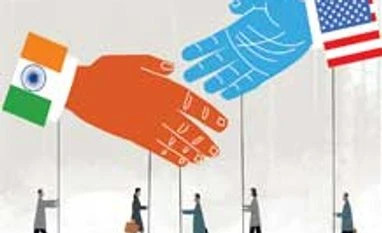 "US needs to increase counter-terror cooperation with India: Experts")


 Connect with us on WhatsApp