
What Sri Lankan constitution says about President's power to sack PM
The prime minister can only be dismissed if the Cabinet of ministers is dismissed, the prime minister resigns or the prime minister ceases to be a member of parliament
 "What Sri Lankan constitution says about President's power to sack PM")
WebinarsNew
Deep DiveNew
Explore Business Standard
The prime minister can only be dismissed if the Cabinet of ministers is dismissed, the prime minister resigns or the prime minister ceases to be a member of parliament
Following is an explainer on what Sri Lanka's constitution says on the president's power to sack the prime minister, a move that has triggered a constitutional crisis in the country.
The political developments unfolded after President Maithripala Sirisena's broader political front United People's Freedom Alliance (UPFA) withdrew from the unity government with Prime Ministe Ranil Wickremesinghe's United National Party (UNP).
Sirisena and Wickremesinghe joined hands to form a government of national unity in 2015 to bring in constitutional and governance reforms including a new Constitution to address the long-standing issues of the Tamil minority.
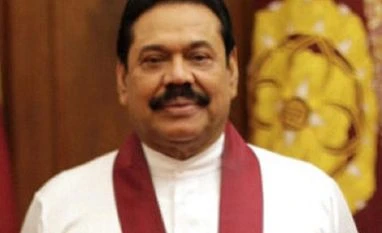
Sirisena on Friday night sacked Wickremesinghe and appointed former strongman Mahinda Rajapaksa as the new prime minister. Sirisena also suspended parliament till November 16 after Wickremesinghe sought an emergency session to prove his majority.
Under the 19th Amednement adopted in 2015, the president no longer has the power to remove the prime minister at his discretion.
The prime minister can only be dismissed if the Cabinet of ministers is dismissed, the prime minister resigns or the prime minister ceases to be a member of parliament.
The president can only remove a minister only on advice of the prime minister.
President Sirisena camp's argument was that the Cabinet ceased to exist the moment the UPFA withdrew from the national government.
When there is no Cabinet, no prime minister and the president has the power to appoint the person whom he thinks commands the majority in parliament.
According to the Nineteenth Amendment was enacted in 2015, the prime minister can only cease to hold office by death, resignation, by ceasing to be a member of parliament, or if the government as a whole has lost the confidence of parliament by a defeat on the throne speech, the budget, or a vote of no-confidence
According to Wickemesinghe, what Sirisena did was unconstitutional because as per Article 46 (2) of the 19th Amendment of the constitution passed in 2015, the president cannot sack a Prime Minister who enjoys majority support in parliament.
Wickremesinghe asserted that he has majority support in parliament.
He has neither resigned from the premiership nor has he ceased to be a member of parliament, Wickremesinghe pointed out.
But Wickemesinghe's claim is contested by the president's supporters who assert Article 42 of the constitution clearly says that the president shall appoint as prime minister the Member of Parliament, who, in the his opinion, is most likely to command the confidence of Parliament.
And in Sirisena's opinion, Wickremesinghe is not likely to command the confidence of parliament and has therefore lost the right to be Prime Minister.
Although Wickremesinghe have the option to move the Supreme Court challenging the president's decision on constitutional grounds, he has decided not to as needs to substantiate his claim by proving parliamentary support during a vote of confidence.
Wickremesinghe is confident of proving majority support, according to the Island newspaper.
Currently, Rajapaksa has 95 MPs of the United Peoples' Progressive Alliance (UPFA). Wickremesinghe's United National Front has 106 MPs.
Rajapaksa needs 18 more MPs to give him a simple majority of 113 in the House of 225 members.
Rajapaksa already got the support of two UNP MPs on Friday Vasantha Senanayake and Ananda Aluthgamage.
Additionally, there are Indian-origin Tamil and Muslim parties which have a policy of always being on the side of the government irrespective of the party in power.
Main Tamil Party Tamil National Alliance has 16 MPs and the Janatha Vimukthi PeramunaJVP, a communist and MarxistLeninist party, has 6.
First Published: Oct 29 2018 | 1:40 PM IST

