
WHO chief Ghebreyesus calls for more investments in public health
This will make the world better prepared for future epidemics and pandemics, Ghebreyesus said
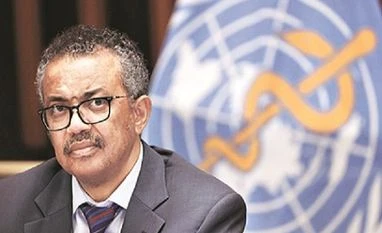 "WHO chief Ghebreyesus calls for more investments in public health")
Explore Business Standard
This will make the world better prepared for future epidemics and pandemics, Ghebreyesus said
World Health Organisation Director General Tedros Adhanom Ghebreyesus on Sunday called on countries to make greater investment in their public health systems to make the world better prepared for future epidemics and pandemics.
"History tells us that this will not be the last pandemic, and epidemics are a fact of life," Ghebreyesus said in his message as the world marks the first ever International Day of Epidemic Preparedness on Sunday.
"But with investments in public health, supported by an all-of-government, all-of-society, one health approach, we can ensure that our children and their children inherit a safer, more resilient and more sustainable world," the WHO chief said.
The Covid-19 pandemic has underscored the need for investing in systems to prevent, detect and respond to infectious disease outbreaks.
The first ever International Day of Epidemic Preparedness was called by the United Nations General Assembly to advocate the importance of the prevention of, preparedness for, and partnership against epidemics.
"With Covid-19 having now killed more than 1.7 million people, devastated economies, upended societies and exposed the world's vulnerabilities in the starkest ways, the value of health emergency preparedness has hit home like never before," said UN Secretary General Antonio Guterres.
"As we strive to control and recover from the current pandemic, we must think about the next. Unfortunately, it is easy to imagine a virus just as infectious but even more lethal."
The International Day of Epidemic Preparedness falls on the birthdate of Louis Pasteur, the French biologist responsible for ground-breaking work on vaccinations.
"Preparedness is a sound investment, costing far less than emergency expenditures. Societies need stronger health systems, including universal health coverage. People and families need more social protection," said the UN Secretary General.
"Communities on the frontlines need timely support. Countries need more effective technical cooperation. And we need to pay greater attention to the encroachment of people and livestock into animal habitats; 75 per cent of new and emerging human infectious diseases are zoonotic," he said.
--IANS
gb/vd
(Only the headline and picture of this report may have been reworked by the Business Standard staff; the rest of the content is auto-generated from a syndicated feed.)
First Published: Dec 27 2020 | 5:38 PM IST


