Home / World News / WHO warns of '2nd disaster' in Pakistan amid fears of water-born diseases
WHO warns of '2nd disaster' in Pakistan amid fears of water-born diseases
WHO expressed grave fears over what it termed to be a "second disaster" in the flood-hit Pakistan, where massive areas are left with standing water triggering water-borne diseases
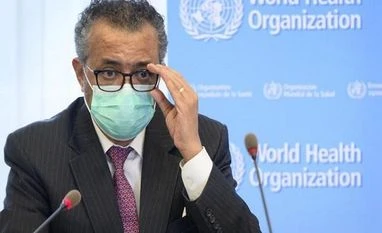
Tedros Adhanom Ghebreyesus, head of the World Health Organization (Photo: AP)
2 min read Last Updated : Sep 19 2022 | 2:44 PM IST
The World Health Organization (WHO) has expressed grave fears and serious concerns over what it termed to be a "second disaster" in the flood-hit Pakistan, where massive areas are left with standing water triggering water-borne diseases which are infecting thousands of the displaced people.
Referring to the grave situation in Sindh province, where the flood water still continues to flow through villages, towns and cities, destroying everything that comes in its way, the WHO has called for donations to save lives and prevent more suffering as a potential wave of diseases and deaths awaited the country already trying to grapple with the destruction caused by the calamity.
"Consumption of contaminated water in flood-hit areas was leading to a surge in diseases including cholera, malaria, dengue and diarrhoea," said WHO Director-General Tedros Adhanom Ghebreyesus.
"Health centres have been flooded, their supplies damaged, and people have moved away from home, which makes it harder for them to access their normal health services. All this means more unsafe births, more untreated diabetes or heart diseases and more children missing vaccination, to name but a few of the impacts on health," he added.
Ghebreyesus highlighted that health workers in Pakistan are already working beyond their capacity and are stretched to their limit as they try to provide critical healthcare to millions affected by the floods.
The catatrophic floods have destroyed over 2,000 healthcare facilities, adding up to the mounting challenges for health workers.
"The WHO would be setting up health facilities and medical camps nationwide. WHO had already provided water purification kits and oral rehydration salts to manage diarrheal diseases. We would also be increasing surveillance of diseases in the region to prevent outbreaks," said Ghebreyesus.
"The WHO immediately released $10 million for the WHO Contingency Fund for Emergencies which enabled us to deliver essential medicines and other supplies to the country."
As hours and days pass by, the number of displaced people continue to increase.
At the moment, at least 35 million people have been affected by the floods. About 16 million of them are children while over 1.6 million females are in immediate need of pregnancy and menstrual relief kits and aids.
Some 3.4 million children are in urgent need of life saving healthcare.
At least 1,545 people have died till now, over 500 of them being women and children.
--IANS
hamza/ksk/
(Only the headline and picture of this report may have been reworked by the Business Standard staff; the rest of the content is auto-generated from a syndicated feed.)

 "WHO warns of '2nd disaster' in Pakistan amid fears of water-born diseases")

