As Quentin Tarantino’s new film revisits Los Angeles at the end of the ‘60s, a man who was there — and literally wrote the book on Manson — argues that we never really left.
The Manson case had a touch of evil to it — in fact, more than a touch; it was, in many minds, a post-apocalyptic deluge. It exposed how defenceless the folk-rock stars, the movie stars, the producer stars, the drug stars, the limo driver stars and thousands of would-be and wannabe stars were in their pretend fortresses up in the hills of Los Angeles and Malibu.
No one had guards packing pistols or rifles in the summer of 1969. It was as if the whole Los Angeles scene was being protected by the hippies at Hog Farm commune, who had recently provided security at Woodstock consisting of what their leader called “seltzer bottles and cream pies.”
Then, around midnight on Aug. 8, Abigail Folger was lounging in a Cielo Drive guest room in Benedict Canyon, reading a book, when a knife-wielding Susan Atkins walked into her bedroom unannounced. Folger, an heir to the Folgers coffee fortune and a guest of the very pregnant actress Sharon Tate, waved hello.
It was ultimate vulnerability.
The ultra-brutal killings that followed stunned the world, prompting headlines about Hippies and Weirdos and Ritual Murder. Along with Folger and Tate, who was married to the director Roman Polanski, the victims that night included Folger’s boyfriend, the Polish writer Wojtek Frykowski; Tate’s friend, the hair-stylist-to-the-stars Jay Sebring; and a young man named Steven Parent, who had been visiting the estate’s caretaker.
The next night, in another part of town, the owner of a supermarket chain, Leno LaBianca, and his wife, Rosemary, were killed in a similarly barbaric fashion, with the words “Healter Skelter,” misspelled by one of the killers, written in blood on the LaBiancas’ refrigerator.
Things changed quickly in Los Angeles after that.
As I first began to investigate the case for my 1971 book, “The Family,” the allure of the Tate-LaBianca murders seemed obvious: It had famous rock ‘n’ roll stars like Dennis Wilson of the Beach Boys, who briefly housed the so-called Manson family; it had the appeal of the Wild West; it had the bass drum of the 1960s, with its sexual liberation, its love of the outdoors, its ferocity and its open use of drugs. It had the hunger for stardom and renown; it had religions of all kinds; it had warfare and hometown slaughter; and it had it all in a huge panorama of sex, drugs and violent transgression.
But now, I ask myself: What is the big deal about the Manson family? After 50 years, surely the obsession has died down?
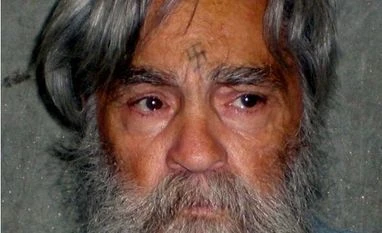
It has not. As the bountiful media attention around Quentin Tarantino’s new film, “Once Upon a Time … in Hollywood,” attests, the obsession is alive and well. And that film is only the latest in a long line of pop culture products from the past half-century to be inspired by the crime, including movies, TV series, a stop-motion animation film and too many documentaries, books, articles and musical tributes to count. At least one prestigious university offers a semester-long seminar on the murders.
As the novelist Graham Greene noted in “The Third Man,” “One’s file, you know, is never quite complete, a case is never really closed, even after a century, when all of the participants are dead.” And as Tarantino knows, Hollywood dotes on self-revealing and self-obsessed stories about itself.
We may be stuck with Charlie Manson for a while.
The end of the ’60s
The Manson case had ripped aside the veils of Hollywood and inflamed the world’s interest, and as a fairly well known musician and writer of the counterculture at the time, I was interested, too, if at first for different reasons. For years after my book was published, I had so much Manson family lore in the front of my brain that my personal calendar was based on what the Manson group had done on that particular day in 1967, ‘68 or ‘69.
When I first started looking into the family, I thought they might be innocent, and might have even been framed. I pondered whether some scheme were afoot to blame a hippie tribe with psychedelic dune buggies for some killings that others had committed.
I soon learned otherwise.
In my weekly column, written during the 1970 trial for The Los Angeles Free Press, I tried at first to write about Manson and the other defendants as human beings, not cult demons. I was also concerned with whether Manson and his followers were being judged by a jury of their peers.
In addition, I was against the death penalty, and the prosecutor, Vincent Bugliosi, although a good Los Angeles liberal, was very adroit at putting on a trial that could lead to a death sentence.
If Manson got death, I wrote in one of my columns at the time, then what about William Calley and the perpetrators of the massacre at My Lai during the Vietnam War?
© 2019 The New York Times News Service





