Senior officials from six world powers met Wednesday in Geneva in a new bid to reach an agreement with Iran on its nuclear program despite opposition from Israel, some members of the US Congress and Iranian hard-liners.
Ayatollah Ali Khamenei, who has the final say on policy matters in Iran, assured an audience of thousands of members of the hard-line Basij paramilitary organisation that the negotiators would not compromise on Iran's main nuclear policies.
"I do not interfere in the details of the talks," Ayatollah Khamenei said in a speech in Tehran. "We will not step back one iota from our rights."
Iran's leaders have always emphasised a set of "red lines," vowing not to stop enrichment, which has been demanded by five United Nations Security Council resolutions. The Iranians also refuse to temporarily halt enrichment.
The Geneva talks are a continuation of an attempt two weeks ago to clinch a deal with Iran that would put a brake on its nuclear programme in return for an easing of economic sanctions. American officials say those terms are intended only as a first step to a comprehensive agreement that would remove the risk of Iran's developing a nuclear weapon.
Those talks failed, in part because France, one of the six world powers conducting the talks, objected that the proposed deal did not do enough to curb Iran's uranium enrichment. Western powers fear that Iran is trying to build a nuclear weapon, although Iran says its programme is for peaceful purposes.
The new round of negotiations, tentatively scheduled to run until Friday, will reveal whether the progress both sides said they made in the earlier negotiations provided sufficient momentum to achieve a breakthrough.
Catherine Ashton, the European Union's foreign policy chief, who is hosting the negotiations, began the talks on Wednesday by meeting senior officials of the P5-plus-1: the five permanent members of the United Nations Security Council - the United States, France, Britain, Russia and China - and Germany. Ms. Ashton was to meet with the Iranian foreign minister, Mohammad Javad Zarif, before a formal session with all parties later Wednesday or on Thursday, said Michael Mann, the European Union spokesman.
The White House, in a statement released on Tuesday, said the talks presented an "opportunity to halt the progress of the Iranian program and roll it back in key respects, while testing whether a comprehensive resolution can be achieved."
The statement came after President Obama met congressional leaders to update them on the progress of negotiations and fend off criticism at home and abroad that the proposed deal was letting Iran off too lightly. In a letter to Secretary of State John Kerry on Tuesday, a bipartisan group of six senators said an agreement easing sanctions "should require Iran to roll back its nuclear program more significantly than now envisioned."
Much of the sharpest criticism has come from Prime Minister Benjamin Netanyahu of Israel, who has attacked the terms under negotiation as "an extraordinarily bad deal." In an interview with CNN on Sunday, he said sanctions should not be eased before Iran gives up its capacity to enrich uranium.
Mr. Zarif, speaking to reporters in Rome en route to Geneva, said Israel was seeking to "torpedo" negotiations and maintained the upbeat tone that Iran has adopted since the election of Hassan Rouhani as president earlier this year. "I'm willing to accept serious progress instead of an agreement," he said, "but I'm certain that, with the necessary political will, we can make progress and even reach an agreement."
In his speech, which was broadcast live on state television, Ayatollah Khamenei repeated that Iran wanted relations with all countries, including the United States, but said American leaders were weak in standing up to Israel, which he called an "illegitimate regime" led by "untouchable rabid dogs."
His speech, illustrated his differences with Mr. Rouhani in the area of foreign policy. Mr. Rouhani has promoted a campaign of detente with the West and a less strident foreign policy. But Ayatollah Khamenei, who has been the supreme leader since 1989, said Iran's relations with the West could never be normal.
"Our existence is rooted in confronting arrogance," he said. "We must continue to disappoint our enemies."
Nick Cumming-Bruce reported from Geneva, and Thomas Erdbrink from Tehran.
©2013 The New York Times News Service

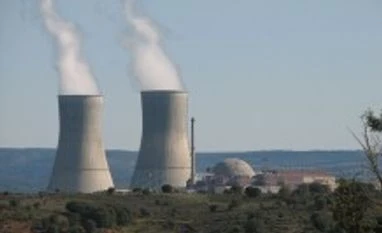 "World powers renew push on Iranian nuclear programme")


 Connect with us on WhatsApp