
Worst day in 10 months as Wall Street reacts to 'Brexit'
S&P 500 lost all the year's gains and suffered its largest decline since late August last year
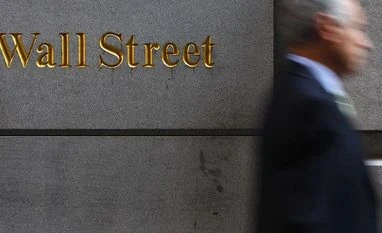 "Worst day in 10 months as Wall Street reacts to 'Brexit'")
WebinarsNew
Deep DiveNew
Explore Business Standard
S&P 500 lost all the year's gains and suffered its largest decline since late August last year
The S&P 500 turned negative for the year-to-date on Friday as Wall Street suffered its largest selloff in 10 months after Britain's decision to leave the EU caught traders wrong-footed.
In the busiest trading volume for a single session in nearly five years, financial stocks led the decline on the S&P 500 with a 5.4% drop -the largest for the sector since November 2011.
The S&P 500 lost all the year's gains and suffered its largest decline since late August last year.
Equity futures neared an 11-month high to start the overnight session as markets wrongly bet that the "Remain" camp would prevail in Britain's referendum, but sold off sharply as the results showed otherwise - even triggering a market stop put in place to curtail volatility.
The decline during regular market hours seemed more orderly, and the S&P managed to close in the area of what analysts called significant technical support, near 2,040.
Still, many expect the next weeks to remain volatile.
The CBOE Volatility index ended up 49% at 25.76, its highest level since Feb 11 -- when equities hit their lows of the year.
"The market has really not fully digested the second-order impacts of this," said Stephen Auth, chief investment officer at Federated Investors in New York.
"We are keeping our clients in dividend stocks and on a defensive strategy," he said. "That's the story until we reach better risk-reward levels," which Auth said could be near the S&P 500's February low near 1,830.
High-dividend-paying utilities were the only S&P 500 sector to end the day in the black, with a meagre 0.09% gain.
The Dow Jones industrial average fell 611.21 points, or 3.39%, to 17,399.86, the S&P 500 lost 76.02 points, or 3.6%, to 2,037.3, and the Nasdaq Composite dropped 202.06 points, or 4.12%, to 4,707.98.
Many market participants, however, saw the broad-based decline as an opportunity for investors on the sidelines to gradually increase their stock holdings.
"What I see going to happen is the Federal Reserve will not raise rates in 2016, that is off the table and a market positive," said Doug Cote, chief market strategist at Voya Investment Management in New York.
"If you have cash on the sidelines it could be a buying opportunity but I wouldn't be changing (bonds-stocks) allocations right now," he said, adding he expects other major central bank's policies to also give the market support.
The weekly declines in the S&P 500 and Dow industrials, both off 1.6%, were the largest since February, and the Nasdaq's 1.9% drop was marginally lower than the previous week's.
The relatively less severe weekly decline points to an unravelling of trades put in place after polls last weekend showed increasing momentum for the "Remain" camp in the British referendum.
Traders were closely following moves in currencies, calling them the contagion mechanism between markets. The pound tumbled to near $1.32, its lowest level since 1985, before bouncing back to a loss of 8% at $1.3678.
The decline came on fears the Britons' decision to leave the EU could hurt investment and usher in many months of both political and economic uncertainty.
"Expect weaker investment and thereby slower economic growth to persist during the 2-3 year negotiations to leave the European Union," Deutsche Bank economists said in a Friday note.
Volume in US exchanges hit 15.3 billion as the trade-heavy reconstitution of the Russell indexes crossed at the market close. It was the highest volume since August 2011 according to Bats Global Markets and compares with the daily average of 6.8 billion over the last 20 trading sessions.
Declining issues outnumbered advancing ones on the NYSE by a 5.47-to-1 ratio, and on the Nasdaq, a 5.20-to-1 ratio favoured decliners.
The S&P 500 posted 28 new 52-week highs and 12 new lows; the Nasdaq recorded 33 new highs and 107 new lows.
First Published: Jun 25 2016 | 10:35 AM IST

