
WTO rejects US move for 'Made in China' labeling on Hong Kong goods
World Trade Organisation arbitrators concluded that the US was out of line in requiring products from Hong Kong to be labeled as Made in China
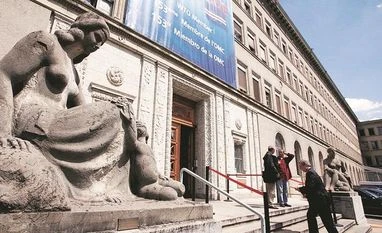 "WTO rejects US move for 'Made in China' labeling on Hong Kong goods")
WebinarsNew
Deep DiveNew
Explore Business Standard
World Trade Organisation arbitrators concluded that the US was out of line in requiring products from Hong Kong to be labeled as Made in China
World Trade Organization arbitrators concluded Wednesday that the United States was out of line in requiring products from Hong Kong to be labeled as Made in China, a move that was part of Washington's response to a crackdown on pro-democracy protesters there in 2019 and 2020.
A WTO dispute panel found the US violated its obligations under the trade body's rules and rejected Washington's argument that U.S. essential security interests allowed for such labeling. The panel said the situation did not pose an emergency that would allow for an exemption under the trade body's rules.
The United States or Hong Kong could appeal the ruling to the WTO's appeals court. However, the Appellate Body is currently inactive because the U.S. has almost single-handedly held up appointments of new members to the court amid concerns it had strayed beyond its mandate. As a result, any such appeal would go into an arbitration void and remain unsettled.
The United States trade representative's office all but said it planned to ignore Wednesday's ruling anyway.
The United States does not intend to remove the marking requirement as a result of this report, and we will not cede our judgment or decision-making over essential security matters to the WTO, office spokesperson Adam Hodgesaid said in a statement.
Hong Kong is one of China's special administrative regions and is considered a separate trading entity from China.
Three decades ago, the U.S. Congress passed a law allowing products from Hong Kong to benefit from a trading status different from China's and potentially lower tariffs -- as long as it remained sufficiently autonomous. By marking products as Made in China, the U.S. can in essence ratchet up the tariffs it levies on goods from Hong Kong.
The U.S. move came in response to political upheaval in Hong Kong in 2019 and 2020, in particular over a National Security Law that Beijing imposed on the former British colony, using it to silence or jail many pro-democracy activists.
In July 2020, then-U.S. President Donald Trump issued an executive order saying that Hong Kong was no longer sufficiently autonomous to justify differential treatment in relation to the People's Republic of China.
(Only the headline and picture of this report may have been reworked by the Business Standard staff; the rest of the content is auto-generated from a syndicated feed.)
First Published: Dec 21 2022 | 11:24 PM IST

