Congratulations, you have either inherited or just bought yourself a woven masterpiece. And how are you going to maintain that pure silk, pure zari, hand-woven sari? Or the priceless pashmina with all-over jaal that your grandmother left you but which has just acquired a dal makhni stain on it?
Vintage weaves need time-tested methods of storing, cleaning, maintaining and restoring, with an extra dollop of tender loving care. Five experts — Mayank Mansingh Kaul (textile archivist and writer), Deepshikha Kalsi (textile conservationist), Asaf Ali (founder, Kashmir Loom), Sanjay Garg (designer and founder, Raw Mango) and Palak Shah (CEO, Ekaya Banaras) — share easy-to-follow hacks to ensure your precious handlooms last another generation or two.
You’ve flaunted your exquisite handloom sari, shawl or kurta at a wedding and it’s now time to pack it up. Stop right there: not before you wrap it in a muslin cloth. Kalsi recommends using unstarched, washed muslin or acid-free tissue paper. “Never use old newspapers. They are highly acidic and destroy the fabric’s strength, besides running the risk of the ink bleeding onto the handloom piece.”
Most revivalists and archivists, Kaul explains, store the saris, shawls and running weaves rolled on rods. “If you have the space, this is far better than folding them.” Shah says that the muslin prevents the zari from being oxidised and helps preserve its sheen and works well for pashminas, too.
But rolling and storing demands the luxury of space. If space is a constraint, Kalsi has a few suggestions. “Change the folds of the fabric at least every quarter. If you can’t avoid stacking, put the heavier saris and apparel at the bottom and lighter ones on top. Hanging is better than stacking, and padded hangers are preferable.
One can also have narrower shelves made, which allows the weight to be better distributed.” She also recommends ceramic-coated steel almirahs over iron ones, and teak-wood almirahs over plywood ones.
Naphthalene balls are taboo. To prevent infestation, the experts suggest small pouches of dried tobacco leaves, dried neem leaves, dried lavender or even a little camphor. Kalsi adds that a small packet of activated charcoal can absorb pollutants in the air and prevent silver-based threads in textiles from being tarnished.
Another basic tip to remember is to never use perfume directly on the fabric. Garg says that perfumes should be applied on the body and not the fabric to avoid any stains or reactions. If your old weave has a musky odour because of being in storage for long, the best way to get rid of the smell is to air it in the sun — but covered with a thin layer of muslin to avoid any damage to the colour by harsh sunlight.
Also, never directly iron over zari or fine threads because this will most certainly destroy the strength of the weave. “Try and use a steam iron that dry-cleaners use — the standing one — with a fabric tied in front, so that there are no chances of splashes on the textile. Of course, direct heat must be avoided at all times,” Kalsi says.
For pashminas and other weaves prone to moth infestation, a good dose of sunlight over the back of the weave is a good trick. “This is usually where the insects eat at the fabric,” says Ali.
But what if you’re too late and you’ve ended up with a couple of damaged heirloom pieces? “You know, India has some of the best repair craftspeople. There’s a village just outside of Delhi called Najimabad that specialises in repairing old weaves,” says Ali.
If your sari has a few holes or pashmina a bit moth-eaten, you can get the embroidery or zari transferred onto fresh fabric or take it to a skilled darner. The Carpet Cellar and Ali’s Kashmir Loom in Delhi can give you sound advice about damaged weaves, if not fix them for you.
Should you send traditional weaves to the dry-cleaner? Old-school wisdom dictates that a cold-water wash is appropriate for handloom weaves. Kaul swears by using reetha, an Indian soapnut, to wash colour-fast shawls and kurtas. Ali points out that pashmina shawls are usually washed at least twice during the weaving process. “If you drop something on a shawl, immediately run it through cold water, dry it and finally iron it with a cotton cloth over it the first chance you get,” he says. Natural soaps, like the ones made in Marseille with pure olive oil, are ideal for stain removal.

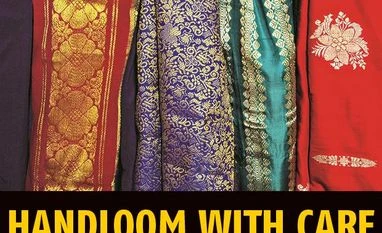 "Textile experts share tips on how to store and maintain vintage weaves")











