It is not true that Asian advertising is more traditional: Prasoon Joshi
Interview with South Asia President, McCann Worldgroup
Sayantani Kar
McCann Worldgroup South Asia President
Prasoon Joshi will be presiding over the Cannes jury for the Titanium and Integrated awards that would be given away at the end of the festival, marking work that is leading edge and opens up new horizons for marketing professionals. He talks to
Sayantani Kar about the challenges of chairing a jury, India's hopes and whether public service campaigns have an edge over other work. Edited excerpts.
What are your expectations from the two awards that you preside over? Titanium is a unique and coveted award. It looks for ads that go beyond normal advertising. It looks for what is redefining the way communication is being done. Titanium, especially, asks if the campaign goes beyond extending the brand image, and solves the client's problem in a way that will change the way we look at advertising. For example, when I was a jury member for Titanium earlier, the campaign for US President Barack Obama had come across as one such campaign, right from its music, pop culture references, films, commentary, ads and social-media use, that had resulted in a cultural shift.
Unlike Integrated, which is an award for great use of various media to achieve a common goal, Titanium does not necessarily have to be awarded if there is no work that matches such expectations.
Is it too much pressure to note the different nuances of really good campaigns for Titanium awards? For me, it will be a learning experience from the discussions between jury members, who are a set of coveted advertising professionals from Latin America, China, Japan, Europe, the US. I can't wait to see how differently they see things from me.
Entries in Film, Press and Radio have gone down. Whereas Cyber Lions, Branded Content, Mobile have seen a leaps in number of entries. Is that a concern? These categories are emerging because of the social change around us. If in the West, appointment-viewing on TV is going down, then that is a reality that advertisers will note. That is when the new categories will emerge. That is why Cannes, as an awards show, is able to stay in touch with the market realities.
As an Asian jury president, what would be your challenges? It has been believed that our part of the world (Asia) is more traditional in advertising. But that is not true. In countries such as India and China, media use is so complex. At home, people watch the telly with their family, while at work, they are on the Internet, social media on handheld devices. Unlike the West, which has left traditional media behind, we continue to use it along with new-age media. The juxtaposition has to be handled by advertising solution providers in Asian countries. I have to convey that.
At Cannes, campaigns with social purpose tend to do well overall. Do ads selling a brand take a backseat? That is a misconception. So is the bias around the world that selling a product is wrong. Advertising people also believe in art. We are very proud of our public-service and social-good campaigns and there is a separate category for those. But the intention is always to find out the true innovations done in the art of selling products.
Also, in today's world, a heavy slant towards corporate social responsibility has become integral to a brand. Any big brand that is not in-sync with social good will fail. Even if it is a soap, it has to add value. Earlier, slip-ups might have gone unreported but in today's connected and congested world, if justice is not done by a brand in one part of the world, it will affect it in its other markets too. Hence, brands have become conscious about their social image.
India has entered with 976 entries. But last year, digital or TV wins eluded it... India is a country which still has media-dark areas. So, outdoor is still relevant and sees good work. As for ads, if you ask our Indian audience, it would say it loves them but the cultural nuances may be a bit too strong. So, probably, we could incorporate a bit more international flavour in ads. At the same time, Cannes has actively brought in juries with heightened sensibilities.

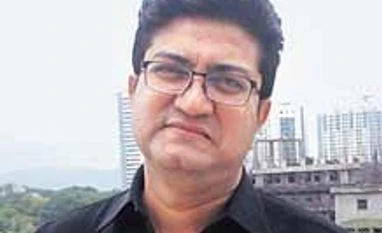 "It is not true that Asian advertising is more traditional: Prasoon Joshi")


 Connect with us on WhatsApp