Men shop for apparel brands impulsively, ads ineffective
Sayantani Kar Mumbai Premium menswear has seen both domestic and international brands spend on mainstream advertising. But before releasing a campaign on TV or going after 'likes' on their Facebook pages, it would do well for brands to understand how Indian men interact with the mid to premium branded apparel category. A study done by Nielsen, the leading global provider of information and insights, says that just one in four shoppers decide on the brand before purchasing, bringing into question the efficacy of advertising.
Nielsen's research in the apparel space shows that the Indian working male flits within a repertoire of brands rather than tie himself to one. He builds himself a repertoire with those brands whose promises he is comfortable with. Once a brand reassures the consumer of its quality, it enters his list of 'must check out' brands during shopping. This results in a set of five to seven brands.
But what matters is the shopper's interaction with brands at stores. Apparel shopping is now an activity of choice for men, who are breaking away from the erstwhile 'don't-like-to-shop' mould. Men's shortlist of brands help them to be on 'auto-pilot'. But Nielsen has found that the shopper is also highly open to influences, both within and outside the store when choosing between these brands, making it possible for brands to secure the consumer with in-shop tactics.
(WHAT MEN THINK WHEN SHOPPING FOR CLOTHES) Brands have to ensure that they enter and remain in the repertoire of the shopper. Studies across FMCG, financial products, auto and apparel indicate that awareness as a 'driver of brand equity' accounts for between 20-75 per cent, depending on the differentiation.
A bigger role of imagery and smaller role of awareness in brand equity signify a category which has brands that are clearly differentiated based on advertising. The opposite denotes that a segment is largely undifferentiated and, hence, driven by how a consumer sees a brand at the point of purchase. Visibility or awareness heavily influences apparel brands.
Visibility can be brought about by advertising. But advertising an apparel brand faces a major challenge. Low differentiation in the category manifests in the advertising creative as well, leading to similar ads. Similar-looking ads run the danger of being wrongly attributed to another brand in the segment (Please refer Fig. 2).
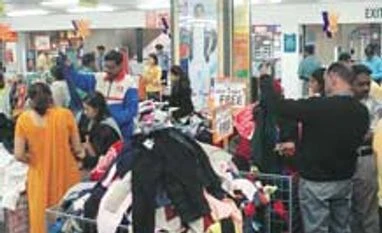
Till the creatives become sharper, it will be the influence at the store which will steer purchase in the segment. The power of retail display is evident in the amount of impulse purchase made (please refer Fig. 3). Even for those who plan their purchase, the brand is not decided upon beforehand. So, 75 per cent of consumers can still be influenced at the stores, evident in the attempts with visual merchandising and shop-in-shops. After all, three out of four male apparel shoppers visit stores to seek out new product experiences, necessitating a refresh atleast every month.

 "Men shop for apparel brands impulsively, ads ineffective")


 Connect with us on WhatsApp