Track the key outlets that give 80% of total sales
Piyush Mathur In the previous column, I had spoken about pricing and how FMCG companies should follow the right strategy to stay afloat in the business. The article talked about how FMCG companies should determine the price gap with competitors, to evaluate whether to be a first-mover or a follower to increase prices. Check whether advertised brands command a premium as compared to the competitors. Evaluate if there exists a price threshold/emotional price-point at which products operate. Simulate options between price increase versus grammage reduction.
In this column, the second part of a four-part series, I am going to talk about distribution, which is one of the key drivers of sales in developing markets like India. Distribution can make or break a company. A good distribution system quite simply means the company has a greater chance of selling its products more than its competitors.
The company that spreads its products wider and faster into the marketplace at lower costs than its competitors will make greater margins, absorb raw material price-rise better, and last longer in tough market conditions.
India is a land of over 1 billion-plus people shopping from over 8.4 million outlets spread across 6,000 towns and 600,000 villages. There are currently over 350,000 FMCG items in the market and that has seen an eight-fold increase as compared to 2007.
In such a traditional trade environment, where the trade is singularly small and collectively large, how can you optimise and maximise with the help of effective sales and distribution strategies? What should companies ideally follow in these tough times.
Most companies either reach the stores directly with the help of company-appointed sales-person or company-appointed distributor. This is called covered/directly-serviced stores. The rest is serviced via wholesale. The go-to-market strategy depends on two factors: a. The product positioning/ consumer segment targeted, ie. premium consumers, niche segment, low-end consumer; b. The current stage of distribution, whether it is a new launch or an existing low distributed brand.
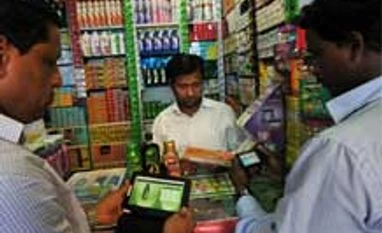
Since the markets are concentrated, the companies should focus on the key stores. For example, only 2.3 million outlets in India, out of 8.4 million contribute to 80 per cent of the market. Brands should identify and track performance in these key outlets. If a company reaches out to the stores directly, it has a five-time increase in the company's per store off-take. Doing the right displays and point-of-sales material in these outlets, and then evaluating their efficiency are critical to understanding the return on investment of every rupee spent on improving the quality of distribution.
Companies should cherry-pick villages, rather than stores. Just 60,000 villages out of 600,000 villages contribute to 60 per cent in FMCG. Brands should reach and cover these villages. They should induce trail and increase awareness in these villages. The other things that the companies should do is leverage little moments of luxury at the store, for example, offer promotions, without overdoing it. Lastly, companies should leverage small packs and price-points to drive distribution.
Companies should also be aware of the implications on account of these strategies. Remember, the quality of distribution as important as is the quantity of distribution. You can't grow value without growing volume.
The author is President, Nielsen India

 "Track the key outlets that give 80% of total sales")


 Connect with us on WhatsApp