In the past two months, 22 companies earlier listed on regional stock exchanges (RSEs) have finally made it to the main platforms of the BSE and National Stock Exchange (NSE).
The RSEs in question had ended operations last year and the companies were subsequently moved to the dissemination boards (DB) of the two major exchanges.
Companies looking to move to the main exchange board have to abide by the rules in the listing framework of these bourses.
“That these companies have been moved to the main board exchange is good news for the investors, who were stuck because there was hardly any trading on the DB. Now that they have managed to move, there would be improvement in their liquidity,” said Hinesh Doshi, vice-president, Investor Grievance Forum.
A DB is a national exchange-arranged platform for companies of RSEs which have been derecognised or on the way to voluntarily seeking it. Each derecognised exchange is assigned an exchange DB, either of the BSE or NSE, where the listed companies of the defunct exchange would be moved.
One reason for poor response to the DB is the low level of accountability in companies with already weak trading activity, unattractive to investors. By the rules, trades in the DB are outside the exchanges' purview; the latter have no surveillance oversight on trades conducted through the board. Moving the companies to the main board would bring them under regulatory purview, giving more credibility to the trades, analysts said.
Some market experts are concerned about companies' ability to meet the listing norms, particularly the minimum public shareholding norms which mandate that promoters cannot hold more than 75 per cent in a firm. There are 250-300 companies on the DB of the two exchanges.
“Some of these companies would find it difficult to find enough investors to bring down their promoter holding, one of the main reasons for these companies not finding listing favour among exchanges. Even if they manage to list, there is no guarantee that their liquidity would improve,” said an exchange official.
Stock exchanges unable to ensure a net worth of Rs 100 crore and a daily turnover of Rs 1,000 crore were derecognised by the Securities and Exchange Board of India, as being unfit to conduct trading activity. The deadline for meeting the net worth and daily turnover criteria ended on May 31, 2014. Since then, the Gauhati Stock Exchange, Bhubaneshwar Stock Exchange, Madras Stock Exchange, Bangalore Stock exchange, Kochi Stock exchange, Vadodara Stock Exchange, Hyderabad Stock Exchange, Uttar Pradesh Stock Exchange, Ludhiana Stock Exchange and Inter-connected Stock Exchange have shut down.

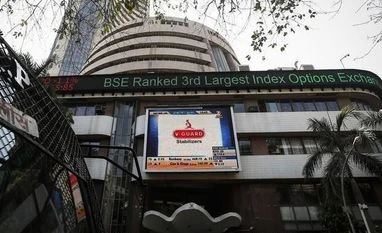 "22 companies migrate to the main exchange platform")


 Connect with us on WhatsApp