Amara Raja scores on higher volume growth in Q1
Ram Prasad Sahu Mumbai The Amara Raja Batteries' stock jumped eight per cent after the company declared results above expectations. While sales came in higher on the back of good volume growth, better product mix aided margin expansion. Good operational performance and higher other income aided net profit growth. While market leader Exide also had a good quarter, with higher realisations primarily on the back of price hikes, Amara Raja's volume growth, especially in the industrial segment, has been better than Exide. While original equipment manufacturer (OEM) sales are weak, the replacement segment has been the mainstay for both companies in the quarter.
Given that the focus of the market leader is on profitability, analysts believe both companies are likely to enjoy pricing power helping improve revenues and margins.
While most analysts have a buy on both Amara Raja and Exide Industries, given the duopoly nature of the business, as well as strong replacement demand, the scales over the next two years are tipped in Amara Raja's favour. "The company is well positioned vis-a-vis Exide, given its better technology and processes. With capacity coming in the second half of the current fiscal, the smaller firm has a lot more potential for growth," says an analyst at a domestic brokerage. At current prices, Exide (Rs 133) is trading at 16 times its FY14 price to earnings estimates, while Amara Raja (Rs 277) is trading at 13.6 times on the same metric. The valuation discount between the two has been reducing over the last couple of years. While target prices for Exide is around Rs 160, those for Amara Raja are in the Rs 340-380 range.
Higher volumes aid sales growth Amara Raja's sales registered a 29 per cent growth y-o-y to Rs 893 crore, almost double the analyst estimates of 15 per cent growth. The sale upsurge was driven by volume growth, especially from the two-wheeler OEM space which it entered in the quarter, double-digit growth in the automobile replacement segment, and traction in the industrial segment. "Technology edge and better brand recall is helping the company in the telecom segment where it is the largest player," says an analyst. Higher realisations and volume growth in the replacement segment helped Exide post a six per cent y-o-y growth in revenues.
Margins perk up Amara Raja imports about half its lead requirement from the international market. Though lead prices have fallen a bit sequentially, the weak rupee has meant that overall costs were up sequentially. Despite the pressures, Ebitda margins of 16.2 per cent managed to beat analyst estimates of 14.5 per cent. This due to strong top line growth, higher gross margins, better product mix, especially on the industrial segment. The industrial segment fetched margins of 19-20 per cent, compared to auto segment's 10-12 per cent. The industrial segment comprises 40-45 per cent of sales. Better product mix, higher replacement sales and lower input costs helped both companies post higher margins on a sequential basis to the tune of 200-300 bps.

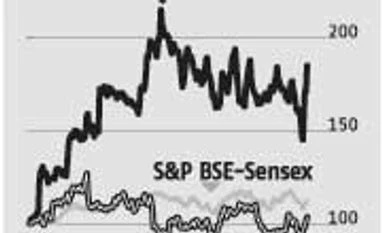 "Amara Raja scores on higher volume growth in Q1")


 Connect with us on WhatsApp