Basmati exports set to decline
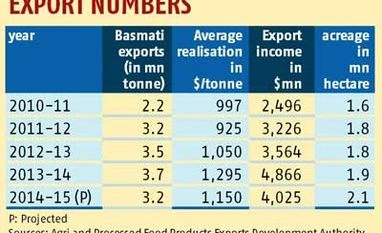
Komal Amit Gera Chandigarh This year, earnings from the export of basmati rice are expected to fall 15-20 per cent, owing to Iran banning the import of the commodity from India.
Iran purchases about 40 per cent of the basmati rice sold in the international market by Indian exporters. Through the past few years, Iran has been charging an import duty on rice (basmati and non-basmati) to safeguard the interests of farmers in that country. This was lifted once the local crop was consumed. Last year, the import duty was raised from 22.5 per cent to 40 per cent in July; the move was rolled back in December. This year, however, Iran banned such imports.
Mohinder Pal Jindal, president of the All India Rice Exporters' Association, told Business Standard though exporters had purchased about 80 per cent of the estimated export demand, there was no clarity on the demand from buyers in Iran.
Besides Iran, Europe and Saudi Arabia are the major buyers of Indian basmati rice. Though demand from these regions is stable, given the bumper crop in India, exporters are bracing up for low prices.
Last year, the average realisation was $1,400 a tonne; as of now, the price stands at about $900 a tonne. It is expected if the import restrictions in Iran aren't lifted, the price will fall further.
Enthused by the high demand and remuneration last year, farmers in Punjab, Haryana and Uttar Pradesh have diversified from non-basmati to basmati this year. However, due to a fall in import demand and oversupply in the domestic market, prices have crashed from Rs 3,500-4,000 a quintal last year to Rs 2,200-2,800 a quintal this year.
A senior official in the Agriculture and Processed Food Products Exports Development Authority said the slowdown in demand had resulted from the ban by Iran. He added in the past few years, basmati exporters had booked huge profits, as Iranian importers had bought aggressively. Last year, Iran had imported 1,450,000 tonnes of rice from India; this year, that country's rice imports from India will stand at 900,000 tonnes.
Annual consumption of rice in Iran is about three million tonnes and production this year is reported at about two million tonnes.
The official added a price correction for basmati was expected, as prices had become unrealistic. High production of food grain across the globe had led to a fall in the prices of various commodities and rice exporters couldn't remain insulated from this trend, he said.

 "Basmati exports set to decline")


 Connect with us on WhatsApp