Basmati rice acreage to go up despite lower realisation last year
Farmers overlook deterrents due to higher returns from basmati crop
Vijay C Roy Chandigarh Area under Basmati rice cultivation might see a five per cent increase this financial year. A bumper crop and decline in exports had led to lower realisation by farmers from the sale of Basmati rice in 2014-15, as compared to the previous year. This, however, would not lead to a fall in area under cultivation this kharif season. Basmati fetches higher returns than other rice varieties.
In 2014-15, the total area under Basmati cultivation was 2.1 million hectares, compared to 1.6 million hectares in 2013-14 — an increase of 31 per cent. Further, exports from India registered a nominal drop in 2014-15 compared to last year. According to the Agricultural and Processed Food Export Development Authority (Apeda), in 2014-15, total exports were 3.70 million tonnes, while during the previous year they were 3.75 million tonnes. In value terms, it has fallen from $4.40 billion in April-February, 2013-14, to $4.11 billion in the same period in 2014-15.
The decline in export was mainly due to a fall in export to Iran, the largest importer of Indian Basmati. India had exported 1.44 million tonnes of Basmati to Iran in 2013-14, while in 2014-15, it was 9.35 lakh tonnes.
R Sundaresan, executive director, All India Rice Exporters Association, said, “The aromatic rice variety offers high returns to farmers. Even during last year, when there was significant increase in area and production, it gave higher returns to farmers. Moreover, it consumes less water than the non-Basmati varieties. With uncertainty over monsoon looming large, we think more farmers would sow Basmati. There could be at least a five per cent increase in acreage.”
Punjab and Haryana account for about 70 per cent of total Basmati grown in India. In 2013-14, Basmati prices were at Rs 1,850-3,700 a quintal, while in 2014-15, due to bumper harvest in these two states, the price of the crop was at Rs 1,700-2,900 a quintal.
Kohinoor Foods Joint Managing Director Gurnam Arora said, “Last year, there was a shortfall in exports to Iran. However, exports to the US, Saudi Arabia and other West Asian countries were on the higher side. Despite bumper production, the average realisation for the farmers was better. So, we are anticipating there will be a five per cent increase in acreage.”
“Basmati fetches better returns than other rice varieties. We request the Centre to fix the minimum support price for the crop so the farmers should not depend at the mercy of exporters,” said Manjeet Singh, a farmer from Amritsar.
In Punjab, the government is encouraging farmers to grow Basmati as it consumes less water.

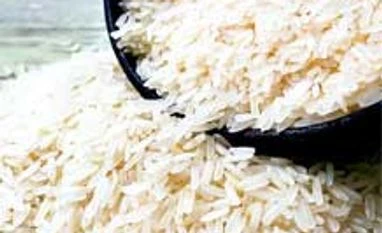 "Basmati rice acreage to go up despite lower realisation last year")


 Connect with us on WhatsApp