Bulk exports of edible oil unviable; groundnut oil may find some takers

If there is, however, a scarcity of edible oil in the country, the government might rethink its policy
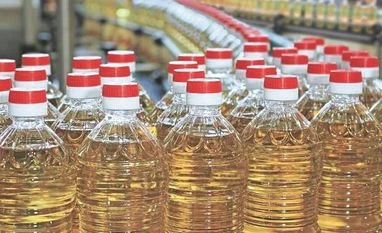
Dependency on imports make bulk exports of edible oil unviable for Indians
Dilip Kumar Jha Mumbai
Last Updated : Apr 03 2018 | 11:16 PM IST
Bulk export of edible oil is unviable for Indian exporters, as the country relies on imports to meet internal demand. Only a small quantity of groundnut oil can be exported.

The government last week removed the decades-old ban on export of bulk edible oils, except mustard oil. Earlier, it had allowed export of 100,000 tonnes of edible oil in small packets. The relaxation, however, is unlikely to benefit exporters much.

At present, India imports 9 million tonnes of crude palm oil annually for refining in local units or blending it with some other edible oils to make it cost effective. It also imports about 3 million tonnes of refined edible oil for direct consumption, in addition to another 3.5 million tonnes of soft oil and non-edible oil.

About 55 per cent of domestic demand is met through imports. This can go up to 60 per cent in years when seed output is scarce.

“As a nation, we rely on imports of edible oil. Hence, export of edible oil in bulk would not be possible, except perhaps a small quantity of groundnut oil occasionally,” said Atul Chaturvedi, chief executive officer, Adani Wilmar, the producer of the Fortune brand edible oils. 

India’s annual vegetable (edible and non-edible) oil import is about 15.5 million tonnes. It produces 6.5-9 million tonnes of oil from vegetables such as soybean, mustard seeds and sesame; of this a small quantity is used for medicinal purposes.

Total consumption of edible oil in the country is 25 million tonnes. According to the data compiled by the Indian Oilseeds and Produce Export Promotion Council (IOPEPC), in 2016-17, India exported 29,000 tonnes of edible oil, earning Rs 3.39 billion.

Some experts feel the removal of the export ban could help increase exports. 

Globally, about 97 per cent of oil trade takes place in bulk. Relaxation of the ban aligns India to international trade practices.

“With this move, Indian exporters are being provided level playing field since. Competing countries do not have any restriction on bulk packing,” said Suresh Ramrakhiani, chief executive officer, IOPEPC.

“We are hopeful that it will enable edible oil exports to grow. If that happens, oil-extraction units will produce more,” said IOPEPC Chairman Sanjay Shah, adding that farmer would benefit from higher prices.

If there is, however, a scarcity of edible oil in the country, the government might rethink its policy.


One subscription. Two world-class reads.

Already subscribed? Log in

Subscribe to read the full story →
*Subscribe to Business Standard digital and get complimentary access to The New York Times

Smart Quarterly

₹900

3 Months

₹300/Month

SAVE 25%

Smart Essential

₹2,700

1 Year

₹225/Month

SAVE 46%
*Complimentary New York Times access for the 2nd year will be given after 12 months

Super Saver

₹3,900

2 Years

₹162/Month

Subscribe

Renews automatically, cancel anytime

Here’s what’s included in our digital subscription plans

Exclusive premium stories online

  • Over 30 premium stories daily, handpicked by our editors

Complimentary Access to The New York Times

  • News, Games, Cooking, Audio, Wirecutter & The Athletic

Business Standard Epaper

  • Digital replica of our daily newspaper — with options to read, save, and share

Curated Newsletters

  • Insights on markets, finance, politics, tech, and more delivered to your inbox

Market Analysis & Investment Insights

  • In-depth market analysis & insights with access to The Smart Investor

Archives

  • Repository of articles and publications dating back to 1997

Ad-free Reading

  • Uninterrupted reading experience with no advertisements

Seamless Access Across All Devices

  • Access Business Standard across devices — mobile, tablet, or PC, via web or app

Next Story


