Buying by local funds balance FII sell-off
Domestic institutions on a 12-day buying streak; pump Rs 13,664 crore into the market
Sneha Padiyath Mumbai Even as foreign portfolio investors (FPIs) intensify their pace of selling in equities and are adversely impacting markets, domestic institutions are quietly strengthening their portfolio of stocks and shares.
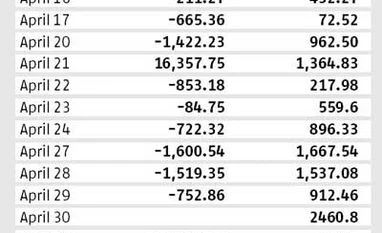
On Wednesday, the markets plunged 722 points, on the back of sharp net-selling of equities worth Rs 1,699 crore by foreign investors. However, domestic institutional investors (DIIs) turned net-buyers in such a market, mopping equities worth a net Rs 1,454 crore.
In fact, domestic institutions have been buyers of equities for the past two weeks while the markets were under the weight of the FPI-selling. According to data from the Securities and Exchange Board of India, in the past 14 trading days, FPIs have been net sellers on all except two. However, that still makes them net buyers at Rs 3,052 crore for the period.
On the other hand, domestic investors have been net buyers of equities on all days at Rs 13,664 crore. The above figures include provisional figures for Wednesday from the exchanges.
“FIIs are, of course, selling and that is putting pressure on the markets. But what is providing support is buying by the domestic mutual funds, insurance companies and some of the provident funds,” said U R Bhat, managing director, Dalton Capital.
According to experts, domestic institutions such as mutual funds have been buying all along, but now redemption pressure at insurance companies also seems to have abated. Life Insurance Corporation of India continues to be one of the larger players, said market participants, with other insurers also joining in, supported by incremental flows into their system.
“There is buying in the market and that will continue until they are fully deployed. If we expect a 16-17 per cent earnings growth next year, then these are very attractive levels to buy into. The markets could provide further buying opportunities,” said Aneesh Srivastava, chief investment officer at IDBI Federal Life Insurance.
However, some in the market are sceptical about the sustained participation by domestic players in the equity markets on account of the nervousness in the market. They believe mutual funds that have been leading the buying spree in equities might not continue to receive such stellar flows. According to data from the Association of Mutual Funds of India, in the last one-year period, MFs have seen equity net-inflows worth Rs 70,000 crore.
“If the markets continue to behave the way they do and fall further, investors may be wary of further investments. Individuals will not want to participate in a falling market, which means mutual funds may not see the same amount of incremental flows that they have been seeing going forward,” said the head of institutional equities at an Indian securities firm.

 "Buying by local funds balance FII sell-off")


 Connect with us on WhatsApp