The drop in iron ore prices in the past six months will hugely benefit the Indian steel industry in terms of import. Domestic steel mills are set to import 15 million tonnes of ore during 2014-15, a five-fold jump from the 3.05 million tonnes imported in 2012-13.
According to industry watchers, the iron ore price, down from $95 a tonne in August to $85 a tonne now, might slip further to $70 a tonne in the near future and to $60 a tonne by the end of this year.
The fall is attributed to commissioning of new mine capacities, whose cost of production is less than $70 a tonne.
"The likely surplus in the iron ore market is unlikely to end soon due to rising international supply and declining global average cost of production," IL&FS said in its latest report on metals.
Domestic steel majors such as Tata Steel, JSW Steel, Bhushan Steel and Essar Steel are considering options to import ore in the current financial year.
JSW Steel, which had announced plans to import six million tonnes of ore in July, is now thinking of importing eight million tonnes, company sources said. Despite having captive mines, Tata Steel plans to import ore in big quantity this year. It has already imported 1.5 million tonnes in the first four months of FY15.
JSW Steel requires 22 million tonnes of to feed its 14.3-million tonne capacity plants, while it is sourcing 60-70 per cent from e-auctions in Karnataka, with the balance requirement being be met through imports.
"Though prices have fallen in the international market, it does not make much sense for Indian companies to import. However, companies are resorting to import mainly because of the short supply in states like Karnataka. Also, once international prices go back to $100-a-tonne level, imports would dry out," said an analyst tracking the sector.
Currently, the landed cost of imported iron ore with Fe content of 65-66 per cent works out to Rs 4,800 to Rs 5,100 a tonne, while domestic iron ore with Fe content of 63 per cent works out to Rs 3,500-4,000 a tonne.
"Considering the fact that imported ore is high in iron content with less impurities like alumina, silica, it consumes lower power and coke. So, steel mills are preferring to use imported high grade iron ore to low-grade fines with just about Rs 1,000 more a tonne cost, which is offset by the higher recovery," said Basant Poddar, senior vice-president, Federation of Indian Mineral Industries (Fimi).
The prices are likely to come down to $70 a tonne in the near future, said H Noor Ahmed, president, Fimi. Australia, Brazil, Canada and South Africa have increased the production of ore. These countries together have spurred an additional quantity of 80 million tonnes in the first half of 2014, Ahmed added.
China is the only country that is maintaining its production; it has stopped iron ore import this year as there are about 100 million tonnes piled at its ports. Unless the domestic production improves and goes back to 200 million tonnes a year, the imports will not go down, Ahmed noted.
Incremental ore supply from the new mines to be commissioned in 2015 and 2016 is likely to add a surplus production of 320 million tonnes over the next two years, according to Bloomberg Intelligence.
"This incremental production is estimated to have a cash cost of production of less than $70 per tonne and, hence, we do not foresee a decline in iron ore prices to be stalled in the near future, despite likely production curtailments at high-cost iron ore mines," said the IL&FS report cited above.

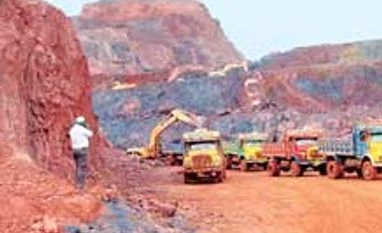 "Cheaper iron ore to drive imports")


 Connect with us on WhatsApp